Friday
09.2026

Meo Vac Town: What to See, Where to Stay and How It Fits the Loop
26 Aug - 2026
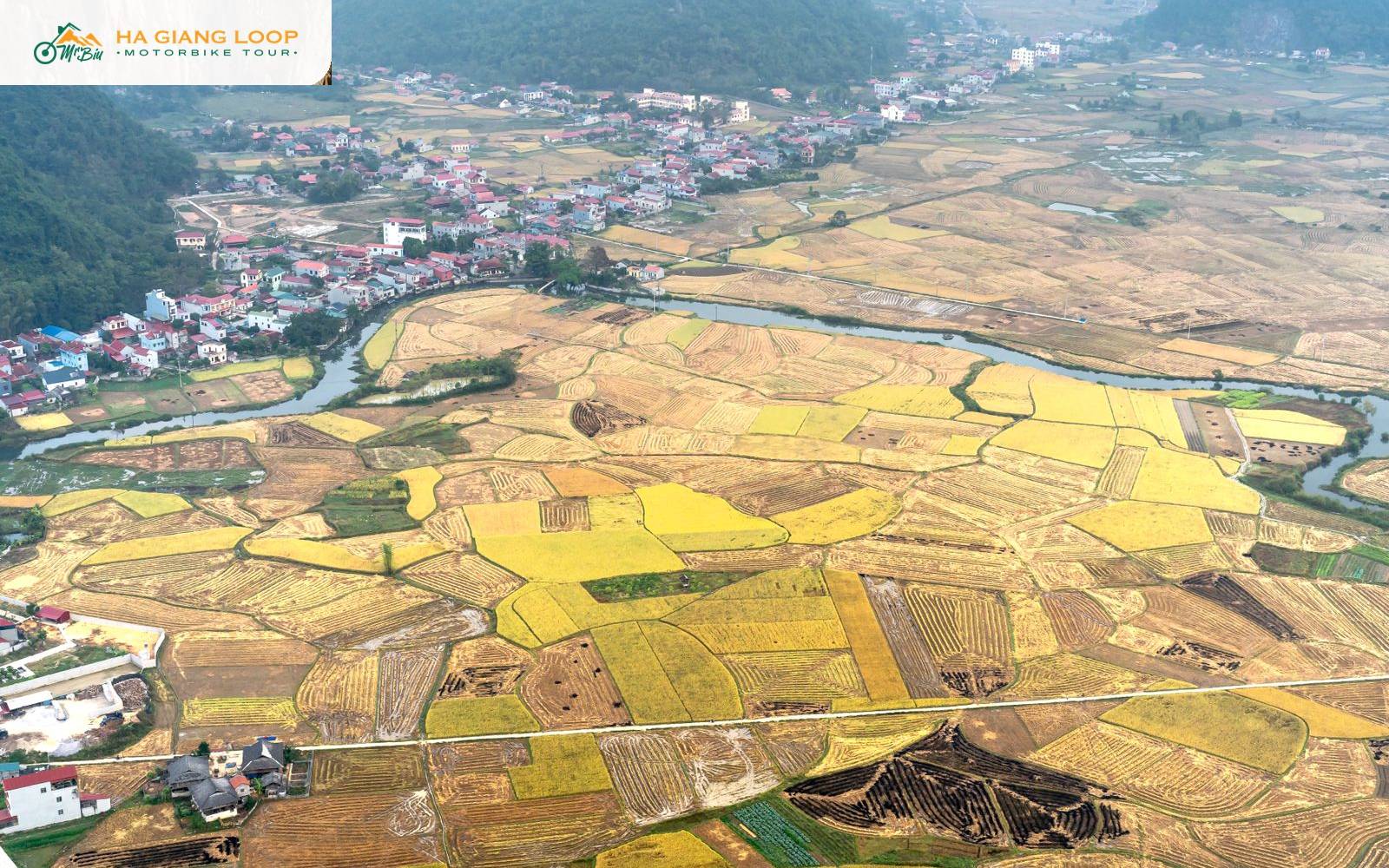
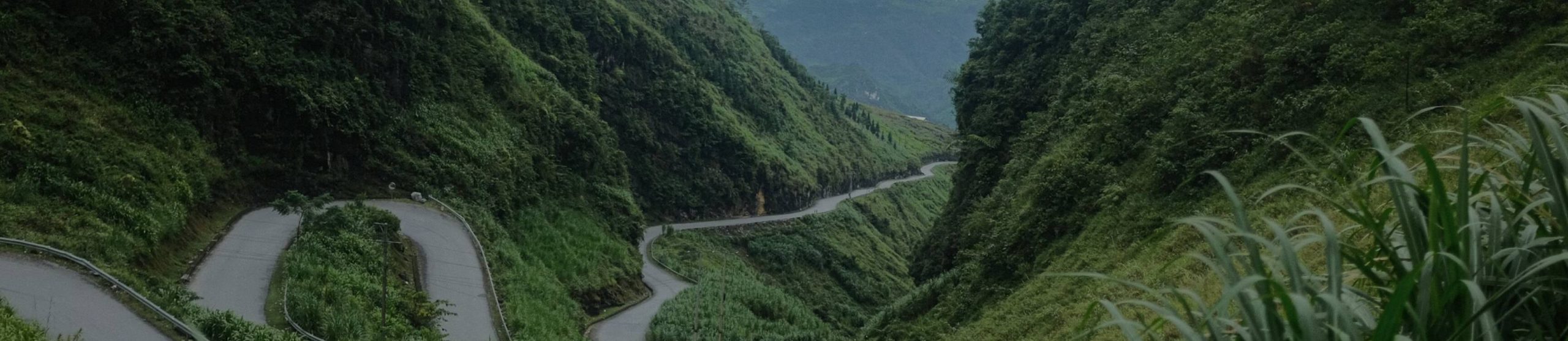
Most riders meet Meo Vac town at the best possible moment. You come off Ma Pi Leng in the late afternoon and the road finally stops clinging to the cliff. Then a small town appears in a bowl of mountains, with smoke rising off the rooftops.
Meo Vac town is smaller and quieter than Dong Van, less set up for tourists, and for some riders that is exactly the appeal. Here is what is actually there, when it is worth staying the night, and how it fits a three or four-day loop.
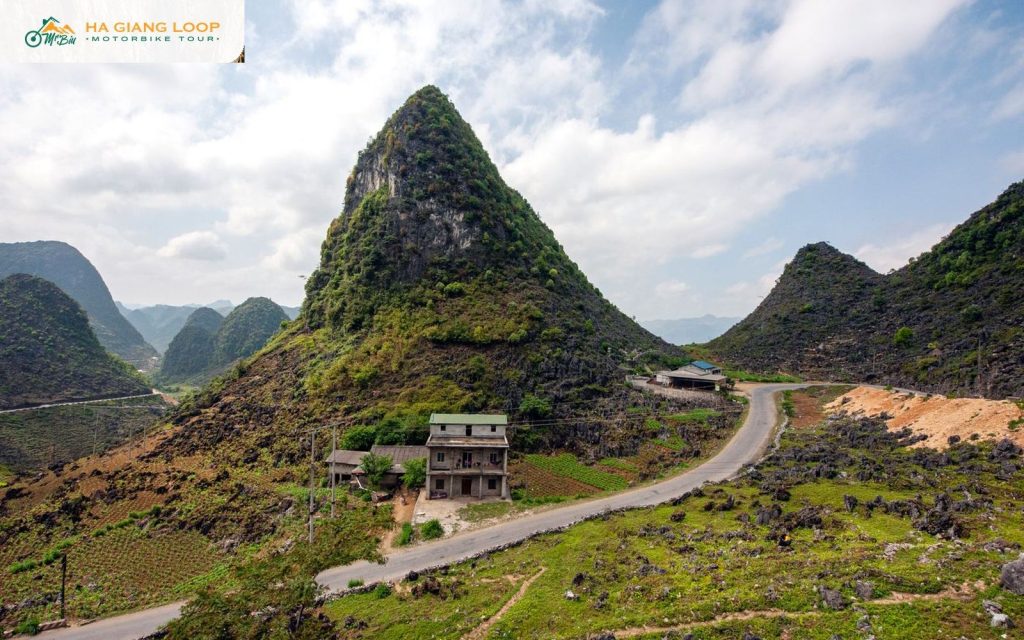
Meo Vac is a small highland town at the eastern end of Ma Pi Leng Pass. It sits about 22 kilometres from Dong Van and roughly 160 kilometres from Ha Giang City. Almost every version of the loop passes through or beside it, because the road down from the pass leads here before turning south.
Its position is what makes it useful. From Meo Vac the route can go three ways: back west to Dong Van, south towards Yen Minh and Ha Giang, or east towards Cao Bang for riders continuing on. That junction role is why the town has more accommodation and food than its size suggests.
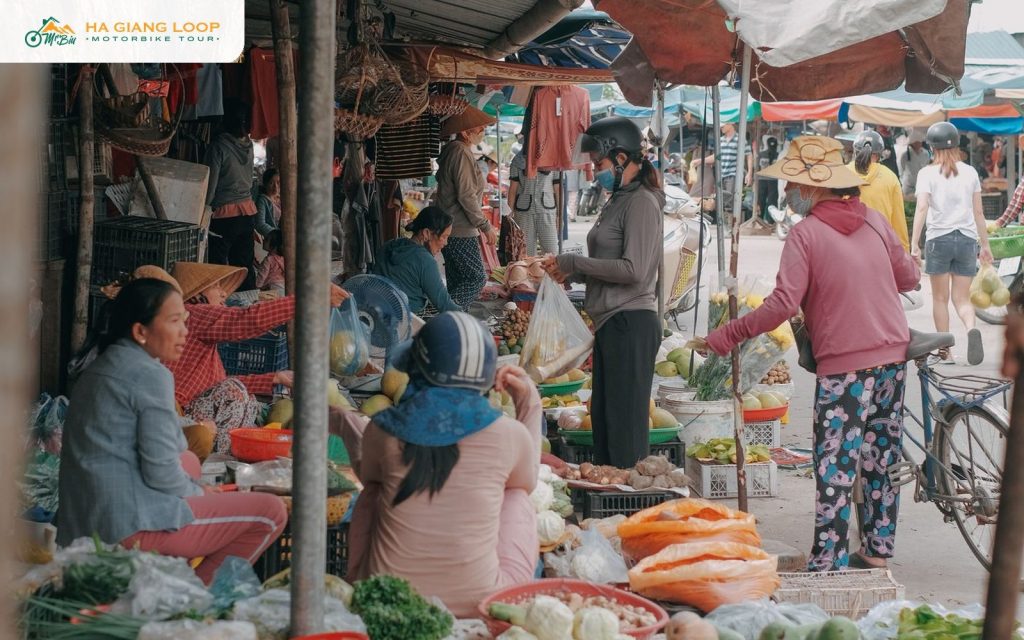
The weekly market is the reason to time your trip around Meo Vac town. Hmong, Lo Lo and Giay families come down from the surrounding villages from early morning. The market handles everything from fabric and farm tools to livestock. It is a working market rather than a tourist attraction — arrive before 8am if you want to see it at full tilt.
Just outside town at the foot of Ma Pi Leng, Pa Vi is a purpose-built Hmong village of stone-walled houses, now home to a cluster of homestays and cafes. Opinions divide: some riders find it too tidy, others appreciate a comfortable bed with a mountain view. Either way it is where the road down to the Nho Que boat station begins.
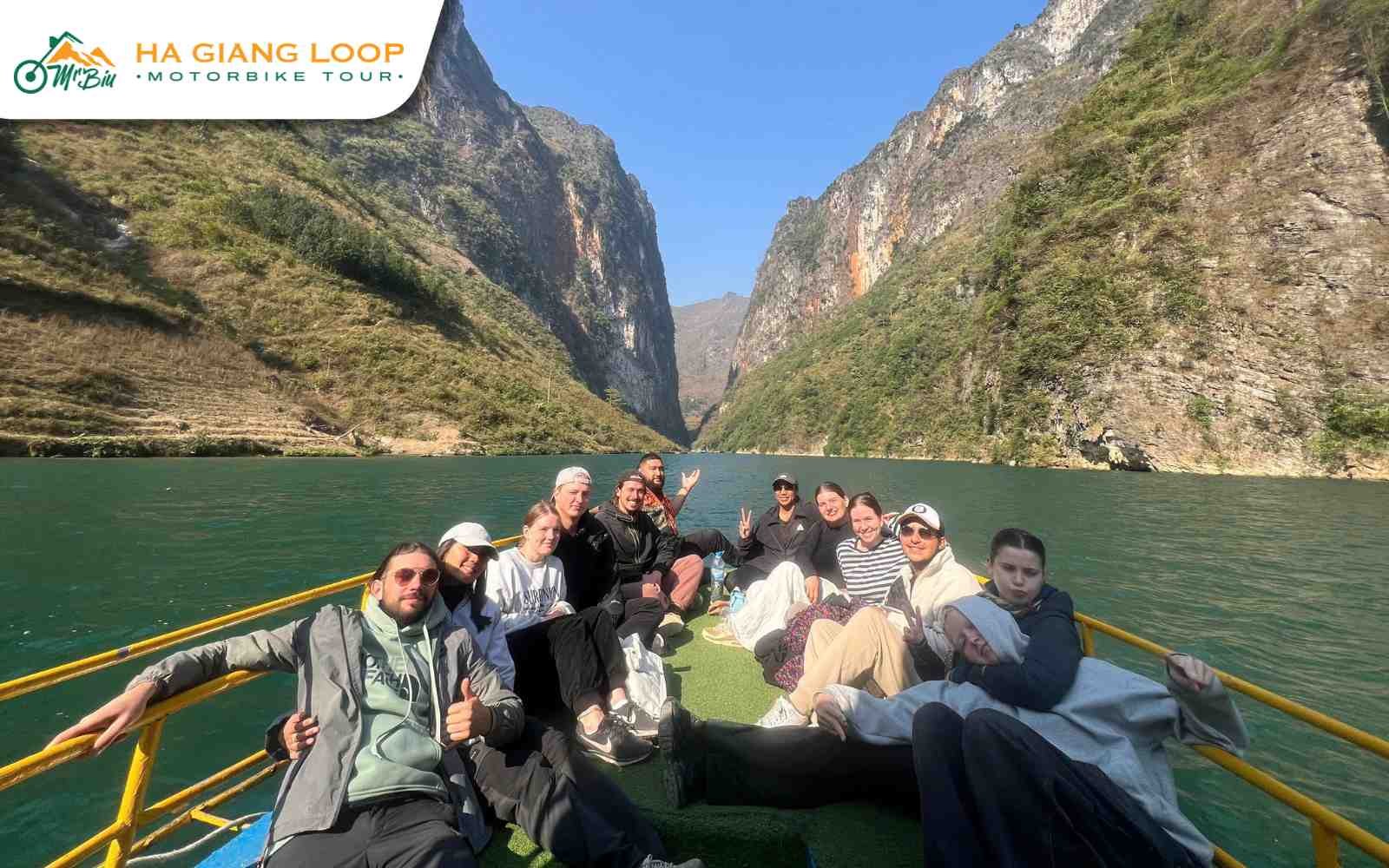
The turning for the boat station is about 500 metres past Pa Vi, and it is now a sealed road roughly five kilometres down to the water. If you want to see Tu San Canyon from below rather than from the pass, this is where you leave the loop for an hour and a half.
Riding the pass west to east is the standard direction, but the viewpoints look different in the afternoon light coming back the other way. If you sleep in Meo Vac, an evening ride a few kilometres up the pass and back is a good use of an hour.
| Meo Vac | Dong Van | |
| Size and atmosphere | Smaller, quieter, more of a working town | Larger, old quarter, more visitors |
| Food options | Local restaurants, fewer choices | Wide range, cafes around the square |
| Evening | Quiet by nine | Old quarter stays open later |
| Market day | Sunday | Sunday (old quarter market) |
| Best for | Riders continuing east to Cao Bang, or wanting the Nho Que boat first thing | Riders doing the standard loop back to Ha Giang |
For a standard three or four-day circuit, Dong Van is the more practical overnight stop. That is where our tours sleep on night two. It also sits better on the route back and has more to do after dark. Meo Vac earns its night when you are heading east to Cao Bang afterwards, or when you want to be at the Nho Que boat station early before the day crowds arrive.
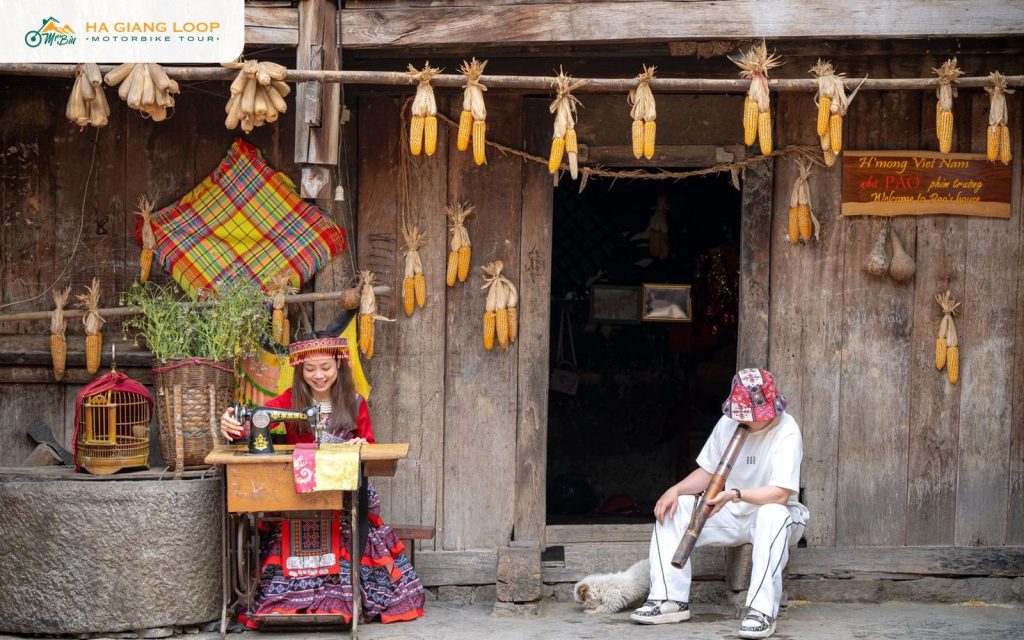
Accommodation splits into three types. In Meo Vac town there are simple guesthouses and a few small hotels, cheap and functional. At Pa Vi there are homestays built in Hmong style, more comfortable and with better views. Scattered along the road are family homestays where you eat with the household — the option we prefer, because the evening meal is half the reason to be there.
Food follows the plateau rather than the city: grilled pork with mountain herbs, sticky rice, chicken cooked over a wood fire, and corn wine that nobody in the room will let you refuse twice. On market mornings the stalls at the edge of the market do a thang co stew worth trying once. Men men, a steamed corn couscous, also appears with almost every meal.
On our tours you cross Ma Pi Leng on day two and come down towards Meo Vac before turning back to sleep in Dong Van. That keeps the pass in the afternoon light. It also leaves the Karst Plateau, Tham Ma and Quan Ba for the ride home.
Two situations change that plan. If you want the Nho Que boat trip, the extra ninety minutes fits better on a four-day schedule. And if you are riding on to Cao Bang instead of returning to Ha Giang City, sleeping in Meo Vac makes the following morning considerably shorter.
Tell us at the start of the trip if either applies to you — the route is easier to adjust on day one than at the junction.
Both of our tours are run by a local family who have ridden these roads their whole lives. Same circuit, same homestays — the only choice is how much time you want to give it.
The classic loop: Thai An Pass, Du Gia waterfall, Ma Pi Leng and the Dong Van Karst Plateau, with two homestay nights. Around 350 km, from $100. Best if your schedule is tight and you still want every headline view.
Everything above plus Lung Cu Flagpole, a Lo Lo village, the Yen Minh pine forest and Lung Khuy Cave, spread over a gentler pace. Around 440 km, from $140. Best if you would rather stop than hurry.
Self-drive or easy rider on both. Message us on WhatsApp at (+84) 3272 58338 or email mrbiu.booking@gmail.com and tell us your dates.
Yes, particularly on a Sunday for the market, or if you plan to take the Nho Que boat trip. As an overnight stop it suits riders continuing east to Cao Bang more than those doing the standard loop.
About 22 kilometres over Ma Pi Leng Pass — roughly 45 minutes to an hour of riding, longer with photo stops, which you will make.
Dong Van for a standard three or four-day loop: better food, more to do in the evening and a better position for the ride home. Meo Vac if you are heading to Cao Bang next or want to reach the Nho Que boat early.
Sunday morning, busiest before eight. Market schedules in the highlands can shift, so confirm with your guide the day before rather than planning your whole route around it.
Yes. The turning is about 500 metres past Pa Vi village at the foot of the pass. Then it is roughly five kilometres of sealed road down to the boat station, fine for motorbikes and cars.
There are ATMs in town, but treat them as a backup rather than a plan — draw cash in Ha Giang City or Dong Van, and carry small notes for market stalls and homestays.