Thursday
10.2026

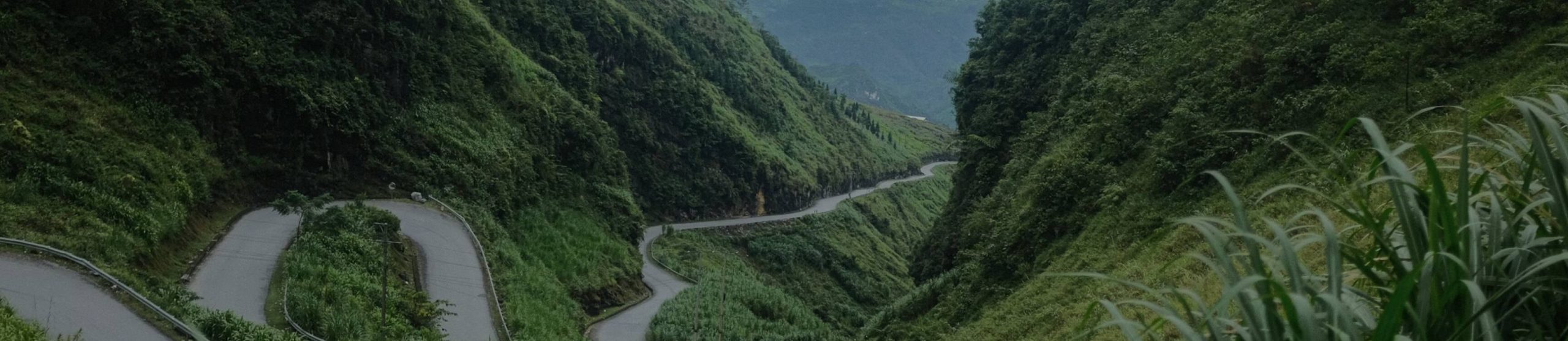
Semi-Automatic Motorbike Basics Before the Ha Giang Loop
24 Oct - 2026
Getting comfortable on a semi-automatic motorbike only takes an hour or so on a quiet, flat street. Riding one safely down a mountain pass, however, is a completely different ballgame.
Many travelers joining the Ha Giang Loop come in with basic scooter experience from past vacations. Because a semi-automatic looks and feels similar, it is easy to assume the learning curve will be just as smooth.
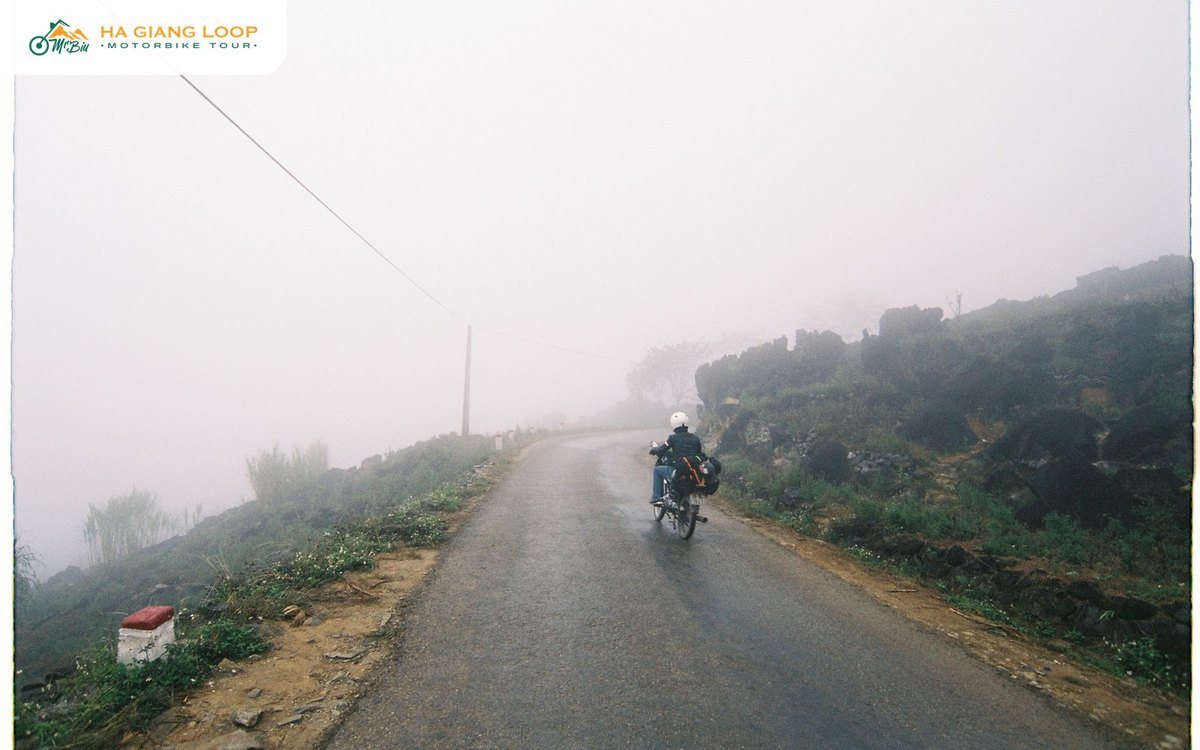
For the most part, shifting gears is straightforward once you get the hang of it. The real challenge hits when you have to manage those gears on a steep 10-kilometer descent, navigating thick mountain fog right behind a slow-moving truck.
This guide walks you through both sides of the ride: mastering the basic controls in a parking lot, and building the crucial safety habits you will need out on the mountain passes.

A semi-automatic has gears but no clutch lever. You change gear with your left foot, and the bike handles the clutch for you inside the engine. There is no lever to squeeze and nothing to stall when you pull away.
The bikes most riders use on the loop, the Honda Blade 110 and the Future 125, both work this way. They have four gears and a pedal with two ends. Press the front of the pedal down with your toe to go up a gear. Press the back down with your heel to go down. Neutral sits below first, and a green “N” lights up on the dash when you find it.
Two things are different from a scooter. You have to choose the gear yourself. And the rear brake is on the right foot, not on the left handlebar. The front brake is still the right-hand lever.
If you upgrade to a Honda Winner or XR 150 on our tours, those are full manual bikes with a clutch lever. That is a different skill, and not one to learn on the loop.
Do not learn on Bac Sum Pass. Learn in town, the afternoon before.
Find a quiet stretch of road or an empty car park. Start in neutral, put the bike in first with your toe, and roll on the throttle gently. Get a feel for how it pulls. Then change up to second around 15 km/h: close the throttle, press with your toe, open the throttle again. The pause between closing and opening is the whole trick. If the bike jerks, you were still on the throttle.
Practise going down too. Slow to walking pace and heel the pedal back into first. Do this until you can find first and second without looking.
Then practise braking. Use both brakes together, more front than rear, and squeeze rather than grab. Stop from 30 km/h a few times in a straight line. If the rear wheel locks and slides, you pressed too hard with your foot.
On our tours, everyone who is driving gets a practice ride on the flat before the climbs start. If it is not clicking by then, you can still switch to a driver. Nobody minds.

The numbers below are rough, because a loaded bike on a slope behaves differently from an empty one on the flat. Use them to start, then listen to the engine.
| Gear | Roughly when | On the loop |
|---|---|---|
| 1st | Pulling away, very steep hairpins | Tight switchbacks on Tham Ma and Chin Khoanh with a passenger |
| 2nd | 15 to 30 km/h | Most climbs and most descents |
| 3rd | 30 to 45 km/h | Gentle climbs, flat valley roads |
| 4th | Above 40 km/h | Straight, flat roads near Ha Giang city and in the valleys |
If the engine sounds strained and the bike slows on a climb, change down. If it is screaming and you are not getting faster, change up. A semi-automatic is forgiving, so a wrong gear rarely does more than make a noise.
The most common mistake on a climb is changing gear halfway round a hairpin. The bike loses drive for a second, slows, and wobbles just when you need it to be steady.
Change down on the straight before the bend. Ride through in that gear with a steady throttle. Change up again once the road straightens. On the steepest passes this often means second all the way up, and first on the tightest corners if you carry a passenger.
Keep to the right. Vietnam drives on the right, and trucks coming down often cut the corner. A short beep of the horn before a blind bend is normal here, and drivers expect it.
This is the part that matters most, and the reason we wrote this guide.
On a long descent, riders who only use the brakes overheat them. The brakes fade, the lever goes soft, and the bike stops slowing properly. It happens gradually, so people do not notice until a bend arrives faster than expected.
The fix is engine braking. Before you start down a pass, change down to second or third. Close the throttle. The engine holds the bike back on its own, and you only touch the brakes to adjust speed before bends. On a semi-automatic this works very well, because the clutch stays engaged as long as you are in gear.
Never coast down in neutral. You lose engine braking completely and rely only on brakes that are about to overheat. On a steep descent, if the bike is still running away in second, go down to first.
Ma Pi Leng, Tham Ma and the long roads down towards Meo Vac and Du Gia are where this matters. Our tips for riding the Ha Giang Loop and how hard the Ha Giang Loop is go into the passes one by one.

A false neutral. Sometimes the pedal stops between two gears, the engine revs and nothing happens. It feels alarming. Close the throttle and press the pedal firmly again.
Resting your foot on the pedal. On a semi-automatic, pressing the gear pedal disengages the clutch. Ride with your left foot flat on the footrest, not hovering on the pedal, or the bike will lose drive at random.
Starting the engine. Always start in neutral, with the green N showing, so the bike cannot jump forward when it fires.
Gravel on a bend. Slow down before it, keep the bike upright, and do not brake hard while leaning. Concrete patches after rain are slippery too.
Ask yourself honestly. Can you change gear without looking down? Can you stop smoothly from 40 km/h? Have you ridden a motorbike for more than a few days in traffic? Do you hold a motorbike licence and an International Driving Permit under the 1968 convention? Our tours require that permit for anyone driving.
If the answer to any of these is no, the loop is not a good place to find out. Mountain roads, trucks and a 120 km day are a lot to take on at the same time as learning a bike. These may help you decide: choosing the right motorbike for the Ha Giang Loop, riding the loop on an automatic and the Ha Giang Loop route for beginners.

A lot of experienced travellers choose to sit behind a driver on the loop, and not because they cannot ride. They want to look at the view instead of the road. If the last section made you hesitate, let a local easy rider take the bends and spend the passes taking photos.
If you want to ride yourself but are new to it, give yourself more time. Our four-day Ha Giang trip adds an extra day and more breaks. It also puts the quiet roads through Thai An and Du Gia on day one, before the big passes. By the time you reach Ma Pi Leng, you will have changed gear a few thousand times.
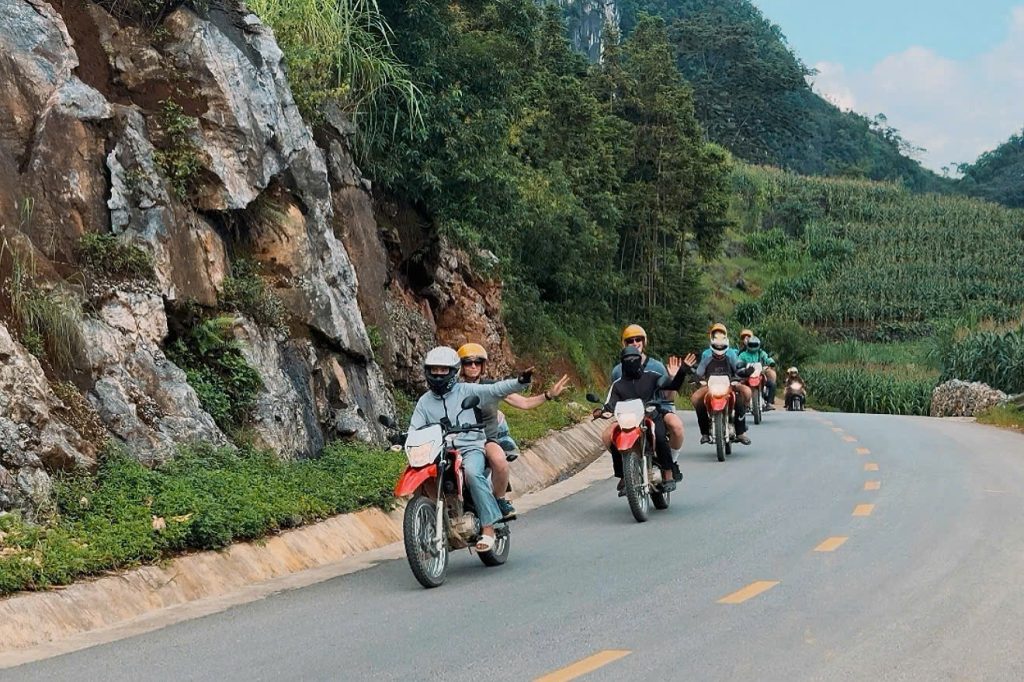
Mr. Biu is a family business from Ha Giang. Our standard bikes are the Honda Blade 110 and Future 125, both semi-automatic, and every rider gets a practice session before the climbs. Groups stay small, at 8 to 9 people. Learn more on the Mr. Biu Tour Ha Giang homepage.
Quan Ba, Dong Van, Ma Pi Leng, Du Gia and Thai An over about 330 km, with two homestay nights. From 2.850.000đ ($114) sitting behind a friend, 3.190.000đ ($128) driving yourself, or 4.000.000đ ($160) with an easy rider.
Starts on the quiet roads through Thai An, then adds Lung Cu Flag Pole and Lung Khuy Cave over about 440 km. From 3.850.000đ ($154), 4.050.000đ ($162) driving yourself, or 4.900.000đ ($196) with an easy rider.
See both trips on our tours page or book online. Questions? Message us on WhatsApp at (+84) 3272 58338 or email mrbiu.booking@gmail.com.
Yes, getting the hang of it is quite fast. Most riders learn to shift gears smoothly after about an hour of practice on a quiet, flat road.
However, handling those same gears effectively on steep mountain descents takes considerably more time and practice.
It is very rare. Because there is no manual clutch lever to manage, pulling away from a stop is smooth and straightforward.
What can happen is bogging the engine down on a steep incline if you stay in too high of a gear. To avoid this, always downshift before you hit the hill.
Yes, self-driving requires proper documentation. To ride independently on our tours, you must hold a valid motorcycle licence alongside an International Driving Permit (IDP) issued under the 1968 Convention.
If you do not have both, joining an Easy Rider tour is the best and fully compliant option.
As a rule of thumb, use second gear on regular descents and drop into first on the steepest sections.
Ease off the throttle completely to let engine braking control your speed, reserving your brakes mainly for slowing down before sharp corners.
Only if you set aside adequate time to practise beforehand. Ideally, you should opt for a guided tour that includes an extra day to help you build confidence on the bike.
If you have never handled a bike with gears before, booking an Easy Rider remains the much safer alternative.