Saturday
10.2026


Is Ha Giang Still a Province? What the 2025 Merger Means for Travelers
29 Oct - 2026
On official administrative maps, Ha Giang province is technically no longer listed as a standalone province. Following the regional restructuring on July 1, 2025, the area officially merged into Tuyen Quang province. If you notice conflicting names between your bus ticket and Google Maps, this administrative shift is the reason.
On the ground, however, daily travel remains completely unchanged. The iconic mountain passes, remote villages, and the Dong Van Karst Plateau are right where they have always been. Locals and travelers alike still simply call it Ha Giang.
The only real difference lies in the paperwork. Updating names across bus portals, permits, and booking platforms has created inevitable confusion. Here is what this merger actually means for your itinerary and what to look out for when planning your trip.
In June 2025, Vietnam’s National Assembly passed Resolution 202/2025/QH15, which cut the number of provinces and centrally run cities from 63 to 34. Ha Giang and Tuyen Quang were merged under the name Tuyen Quang. The provincial government sits in Tuyen Quang city, to the south.
The new province covers about 13,795 km² and has around 1.87 million people. It is made up of 124 commune-level units: 117 communes and 7 wards.
At the same time, Vietnam removed the district level of local government across the country. The old districts that riders know, like Quan Ba, Yen Minh, Dong Van and Meo Vac, no longer exist as administrative units. Their towns were merged into larger communes. Meo Vac town, for example, is now part of Meo Vac commune.
Ha Giang city itself became two wards: Ha Giang 1 and Ha Giang 2. Our hostel in Phuong Thien, on the edge of town, now has a Ha Giang 1 address.
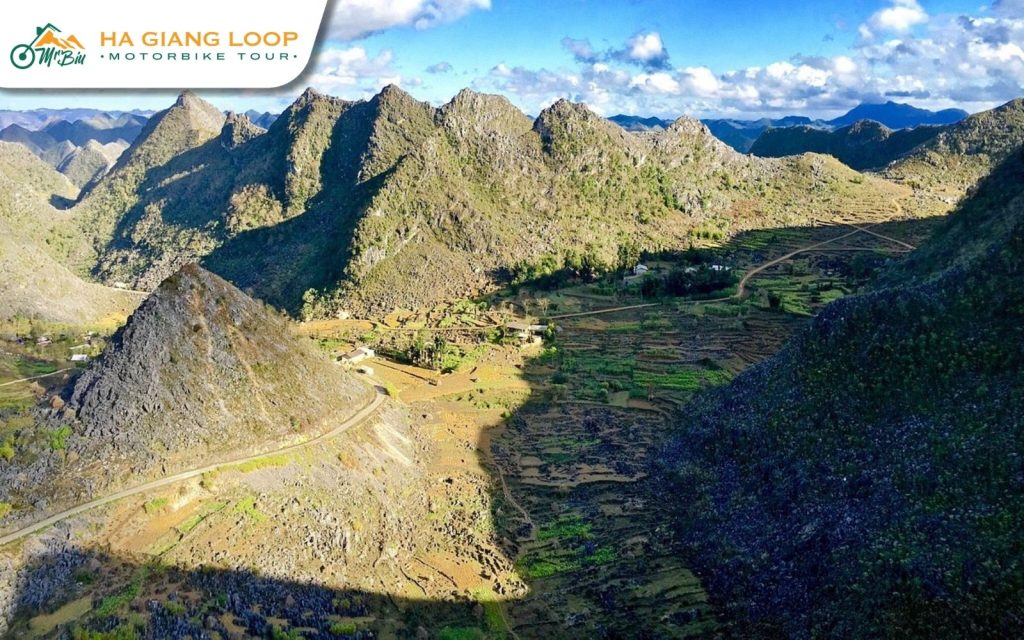
The route itself remains completely unchanged. Every winding mountain pass, remote village, and scenic stretch stays exactly where you expect it to be. The classic loop taking you through Quan Ba, Yen Minh, Dong Van, Meo Vac, and Du Gia still follows the exact same path.
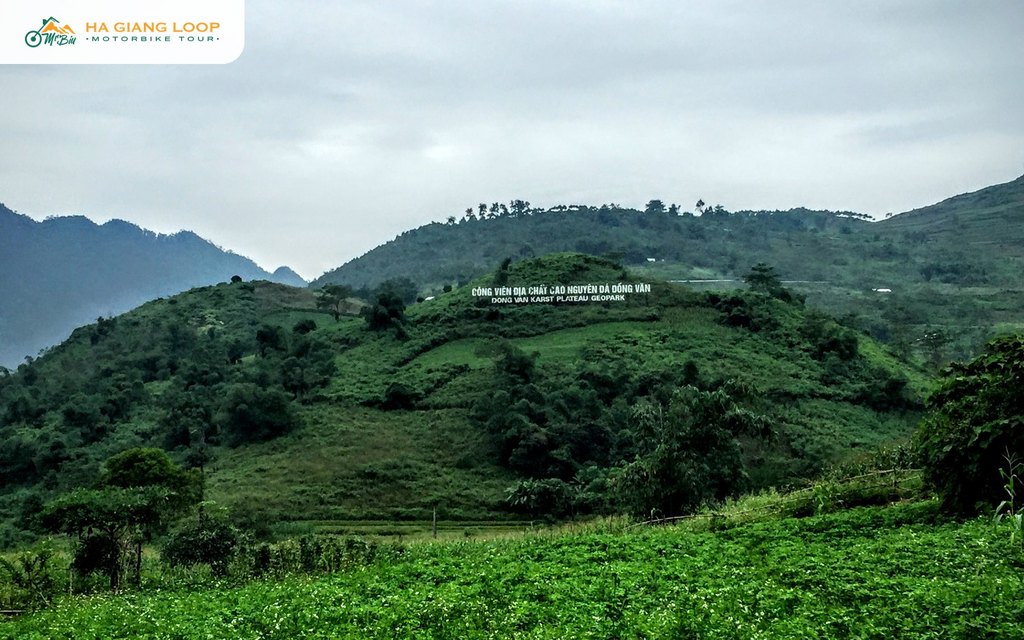
Everyday language on the ground has not shifted either. Local residents, tour guides, bus operators, and roadside signposts all still refer to the region as Ha Giang. Travelers continue to know this journey as the Ha Giang Loop, and the Dong Van Karst Plateau Geopark still retains its official title.
Most travel resources online, including the articles on our own website, still use these familiar names. After all, that is how people talk about the region in real life. To plan your itinerary with full route details, check out our complete Ha Giang Loop guide.
This is where the merger actually shows up. Different services updated at different speeds, so you may see both versions in one trip.
| You might see | What it means | What to do |
|---|---|---|
| “Tuyen Quang province” on a booking or a document | The new official province, which includes Ha Giang | Nothing. You are in the right place. |
| “Ha Giang 1” or “Ha Giang 2 ward” in an address | Part of the old Ha Giang city | Search the street name and “Ha Giang” in your map app. |
| “Ha Giang” on a bus ticket from Hanoi | The city, as everyone still calls it | Nothing. Buses still run to Ha Giang. |
| An old district name, like “Dong Van district” | The same area under its old name | Treat it as the town and its surroundings. |
| A map app showing Tuyen Quang for a place on the loop | The app has updated its province data | Check the town name, not the province. |
When booking a bus or a hotel, search for “Ha Giang”. If a platform only finds Tuyen Quang, check the hotel’s address shows Ha Giang 1 or 2, or a town on the loop. Tuyen Quang city itself is around 160 km south of Ha Giang, and you do not want to book a room there by accident. Our guide to getting from Hanoi to Ha Giang covers the buses in detail.
The border permit for the northern areas did not disappear with the merger. Foreign visitors riding into areas close to the Chinese border still need one, and it is still arranged in Ha Giang city. Some forms and stamps may now carry the name of Tuyen Quang province. That is expected.
Our guide to the Ha Giang Loop permit explains who needs it and how to get it. If you are booking a tour, ask whether the permit is arranged for you or something you sort out yourself.
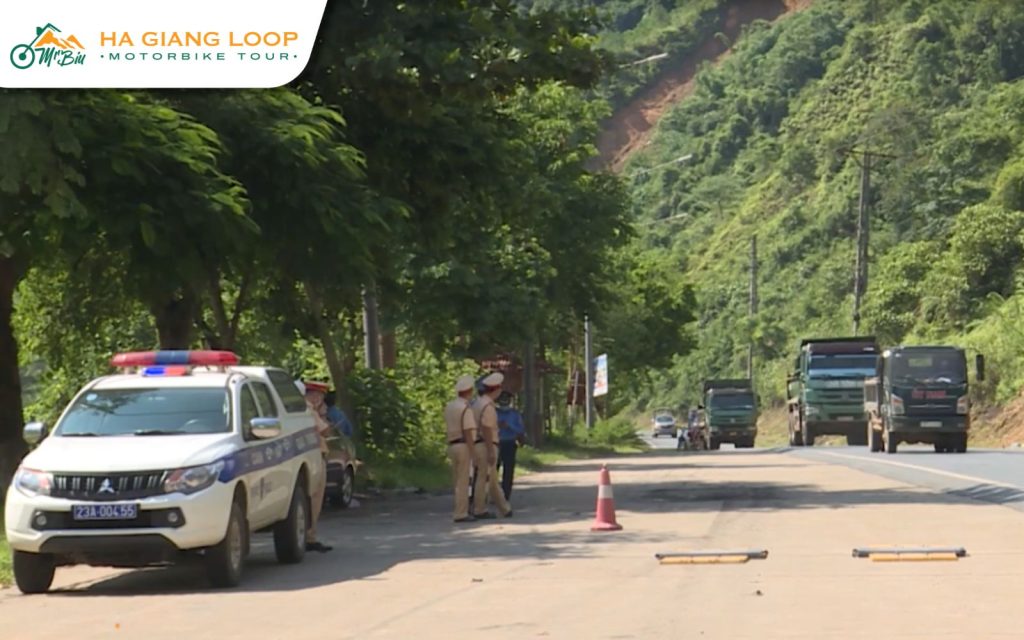
Police checkpoints on the loop work the same way as before. Carry your passport, your permit, and your licence and International Driving Permit if you are driving. Our page on police checkpoints on the Ha Giang Loop explains what to expect.
The merger also means rules for the loop now come from Tuyen Quang. In April 2026, a foreign tourist died in an accident on the loop. Soon after, the province’s Department of Culture, Sports and Tourism issued a directive tightening how motorbike tours are run.
The main points, as reported in the Vietnamese press, are these. Only licensed travel businesses may organise or sell tours. Bikes must be regularly maintained, and helmets and protective gear provided. Operators must not merge groups, change itineraries or swap drivers without approval. Tourists should get a safety briefing that covers protective gear and emergency contacts.
For you, the practical takeaway is simple. Book with a company that can tell you who your driver is, which bike you will ride, where you will sleep and what happens if something goes wrong. If they cannot answer clearly, keep looking. Our 10 questions to ask a Ha Giang tour company go through each of these in turn.
Place names outlast maps. People still call Saigon by its old name half a century after it officially became Ho Chi Minh City, and Ha Giang is going the same way.
The name is in the bus timetables, on the hostel signs and on every motorbike rental shop in town. It belongs to the people who live here. For anyone planning a trip, it is the word to search, the word to say to a taxi driver and the word your guide will use.
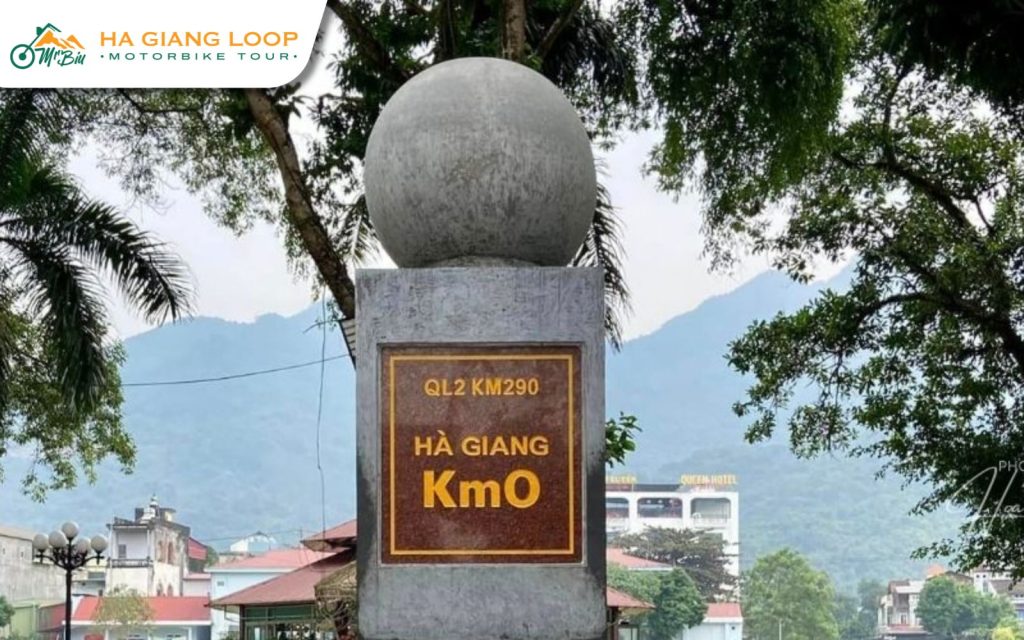
Almost nothing changes for your trip. Every tour still starts and concludes right in Ha Giang city, rolling down the exact same scenic routes you have read about. Ha Giang has always been our home, and it still is. The only real adjustment for us is the updated administrative address on official documents.
Mr. Biu remains a locally rooted, family-run business born and raised in Ha Giang. We keep our groups intentionally small, capped at 8 to 9 travelers, to ensure a genuine, close-knit experience.
To help you rest up before setting off, every booking comes with a complimentary dorm bed at our hostel the night before departure. Explore more about Mr. Biu Tour Ha Giang and how we craft our journeys.
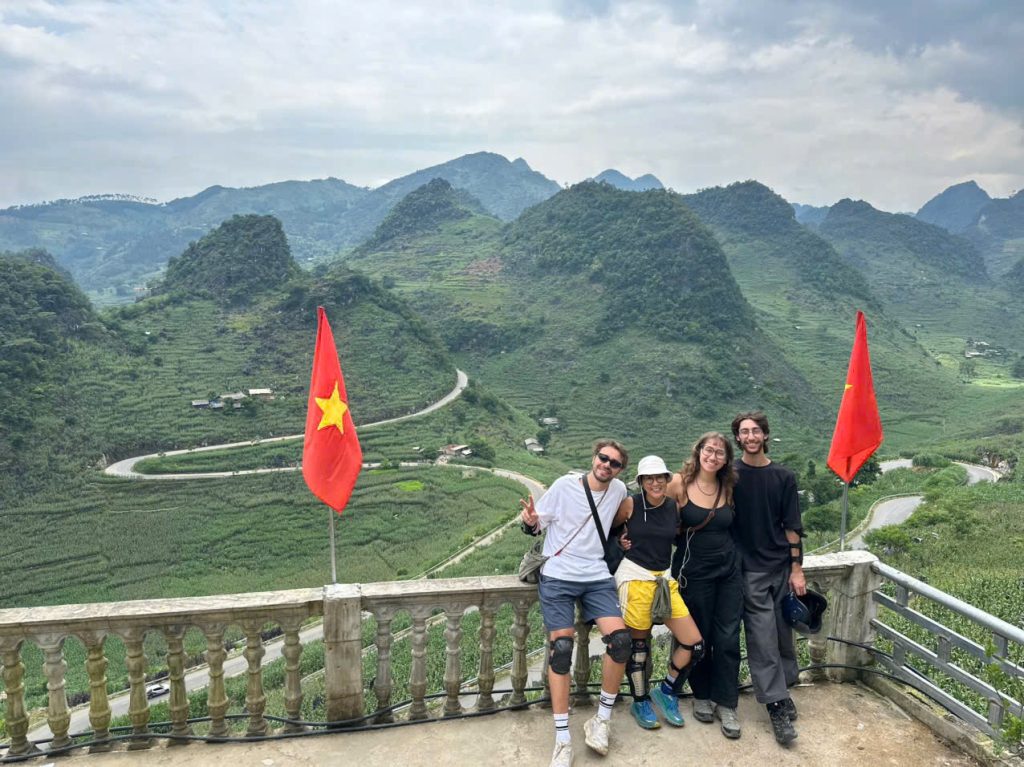
Quan Ba, Dong Van, Ma Pi Leng, Du Gia and Thai An over about 330 km, with two homestay nights. From 2.850.000đ ($114) sitting behind a friend, 3.190.000đ ($128) driving yourself, or 4.000.000đ ($160) with an easy rider.
The same highlights at an easier pace, plus Lung Cu Flag Pole, a Lo Lo village and Lung Khuy Cave, over about 440 km and three homestay nights. From 3.850.000đ ($154), 4.050.000đ ($162) driving yourself, or 4.900.000đ ($196) with an easy rider.
See both trips on our tours page or book online. Questions? Message us on WhatsApp at (+84) 3272 58338 or email mrbiu.booking@gmail.com.
Technically, no. Following the administrative restructuring on July 1, 2025, Ha Giang officially merged into Tuyen Quang province.
Despite the paperwork update, everyone on the ground still refers to the city and the wider region as Ha Giang.
Yes, it is. The former Ha Giang and Tuyen Quang provinces have combined into an expanded Tuyen Quang province.
The regional administrative headquarters is now based in Tuyen Quang city.
Yes, completely open. The merger was strictly an administrative shift, leaving the roads, routes, and mountain passes entirely untouched.
You can ride the loop today just as travelers always have.
Yes. Foreign visitors still need a border permit for the restricted areas in the north, and it is still issued in Ha Giang city.
The merger did not change the rules, only the province name on some forms. Ask your tour company whether the permit is arranged for you.
Always search for “Ha Giang.” Bus operators, hostels, and tour providers still list their services under this name.
Just double-check the final drop-off location and address during checkout so you do not accidentally book a room in Tuyen Quang city instead.