Sunday
09.2026

Nam Dam Village: Dao Homestays and Herbal Baths Near Quan Ba
22 Sep - 2026
Nam Dam village is where most riders on the Ha Giang Loop stop for the first time to sleep in a real village rather than a town. It sits a few kilometres above Tam Son, on the Quan Ba side of the plateau, and it belongs to a Dao Cham community that has been running homestays out of its own earthen houses for more than a decade.
It is also the place to try the one thing your legs will ask for after a day of passes: a hot bath in a wooden tub of Dao herbal medicine. This guide covers where the village is, what a night there looks like, how the herbal bath works, and where it fits on a loop itinerary.
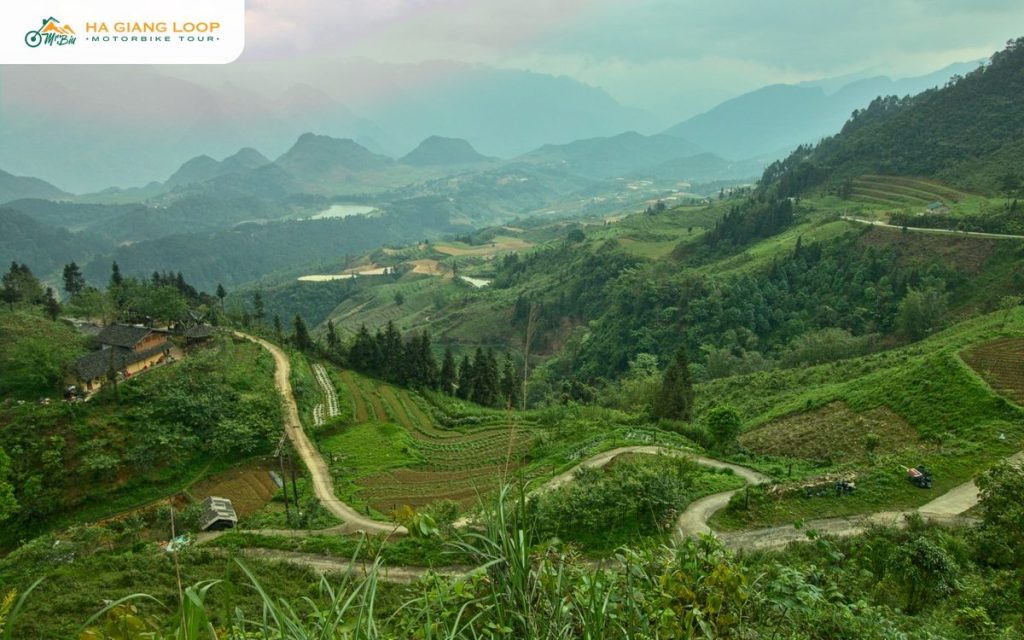
Nam Dam lies in Quan Ba district, about four kilometres from Tam Son town, the first proper town on Highway 4C after you cross Bac Sum Pass and Quan Ba Heaven Gate from Ha Giang city. A small paved road climbs from the highway to the village, so it is an easy detour on any bike.
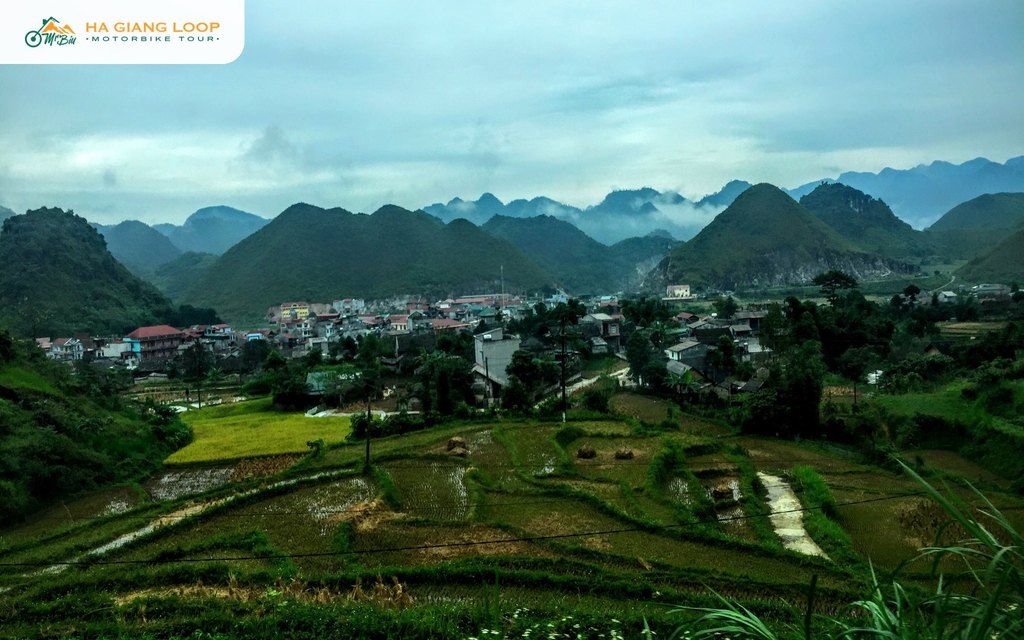
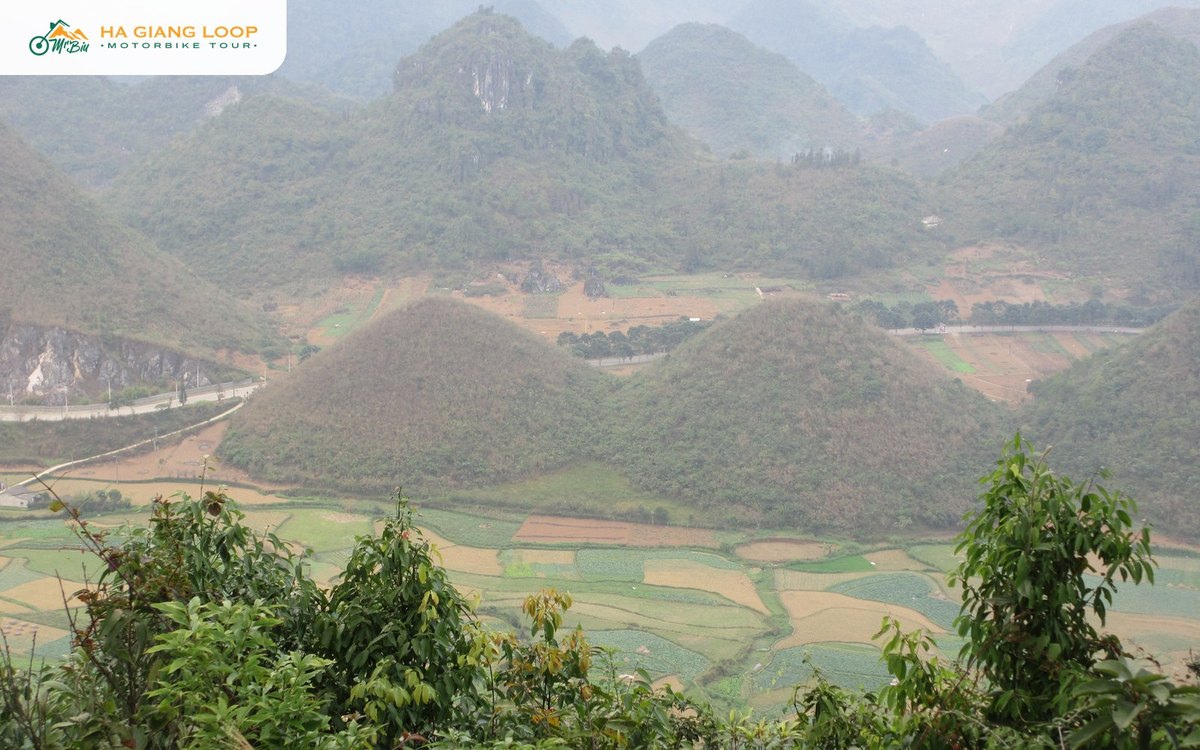
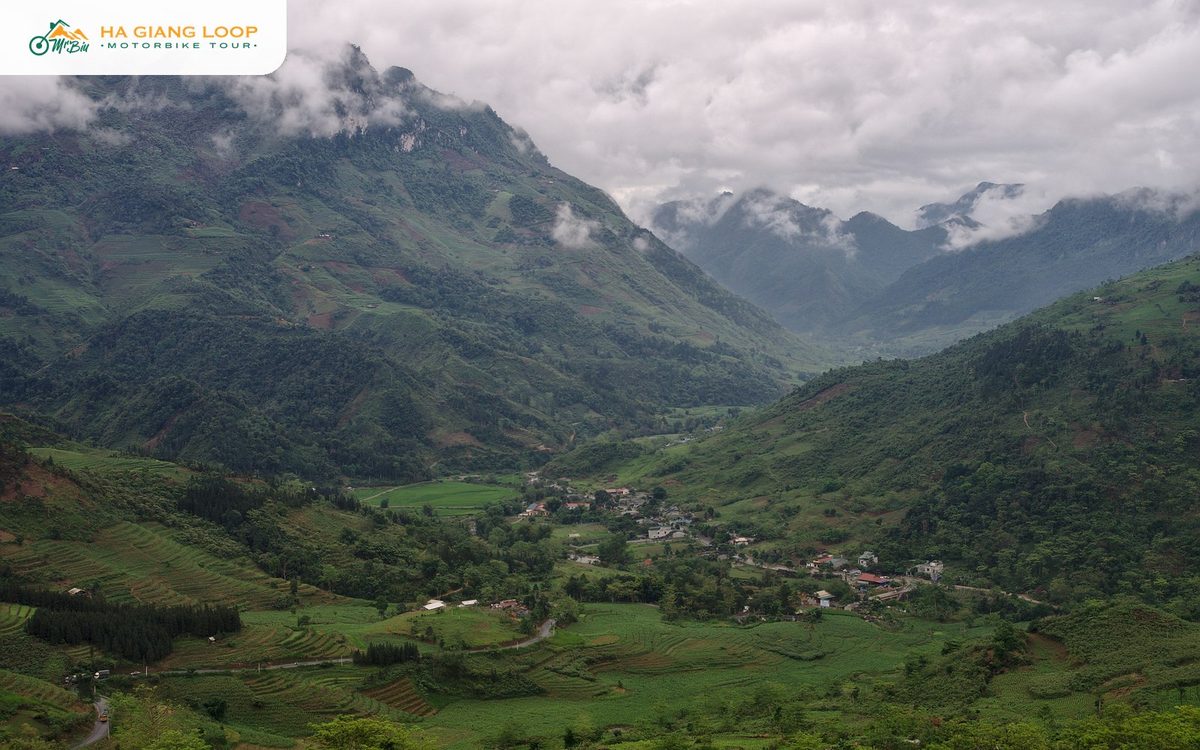
The setting is a bowl of terraces below limestone ridges, with the houses spread across a low hillside. There is no main street. Paths run between yards, gardens and fish ponds, and the village ends where the fields begin. From the higher houses you look back over the valley toward the Twin Mountains and Tam Son town.
The families here are Dao, one of the larger highland peoples of northern Vietnam, part of the wider Yao group whose villages stretch from here across the border into China. The Nam Dam families are Dao Cham, also called Dao Ao Dai, the long-tunic Dao, after the long indigo tunics the women still wear on ordinary days, not only for visitors.
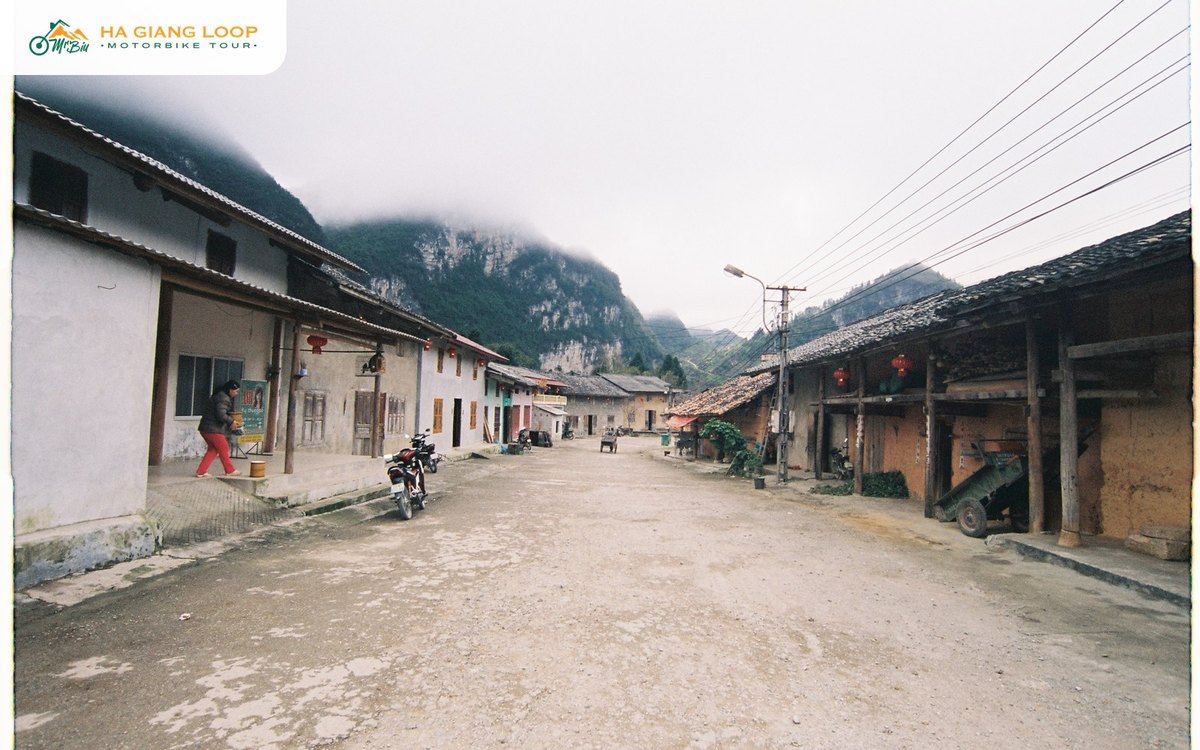
Two things set this village apart from the others on the loop. First, the houses: thick rammed-earth walls, sometimes two storeys, under roofs of yin-yang tiles, cool in summer and warm in the winter fog. Second, the way tourism is run. Nam Dam was one of the first community tourism villages in Ha Giang, set up so that the homestays, the guides and the baths are owned by village families rather than outside companies. It has picked up regional tourism awards for exactly that, and you can feel it in how relaxed the place is. Nobody is selling hard.
The Dao are known across the north for their medicine, and the bath is its most famous form. A mix of roots, bark and leaves, often ten or more plants, is boiled for hours in a big pot until the water turns dark brown and smells of the forest. It is then poured into a tall wooden tub that you climb into up to your neck.
Fifteen to twenty minutes is the usual dose. Longer than that and most people feel light-headed, which is why the hosts will tell you to get out before you want to. Afterwards you sit wrapped in a towel with a cup of tea, and your shoulders remember, for the first time in three days, that they are shoulders and not handlebars.
A few practical points: book the bath when you check in, because the water takes time to prepare. Prices are modest and quoted per person. Skip it if you have had a lot of corn wine, are pregnant, or have heart or blood pressure issues, because the water is hot and the herbs are strong.
Most homestays are family houses with a shared sleeping loft or a row of simple rooms, mattresses on the floor or low beds, mosquito nets and thick blankets in winter. Bathrooms are shared and usually have hot water. A few newer places offer private rooms in separate earthen bungalows built in the old style.
Expect to pay a low price for a bed and a little more for dinner and breakfast, and check whether the bath is included. Bring cash. Bring earplugs if you sleep lightly, because roosters here start early. And bring an open mind: the point of Nam Dam is the family, not the thread count. Our list of the best homestays in Ha Giang has more on what to expect from village stays.
Quan Ba is the gateway of the loop, so Nam Dam works in two places. Riders going anticlockwise from Ha Giang city reach it on the afternoon of day one, after Bac Sum Pass and Heaven Gate. Riders on our route, which starts through Thai An and Du Gia and comes back through Quan Ba, reach it on the final day, which is when a hot bath is worth the most.
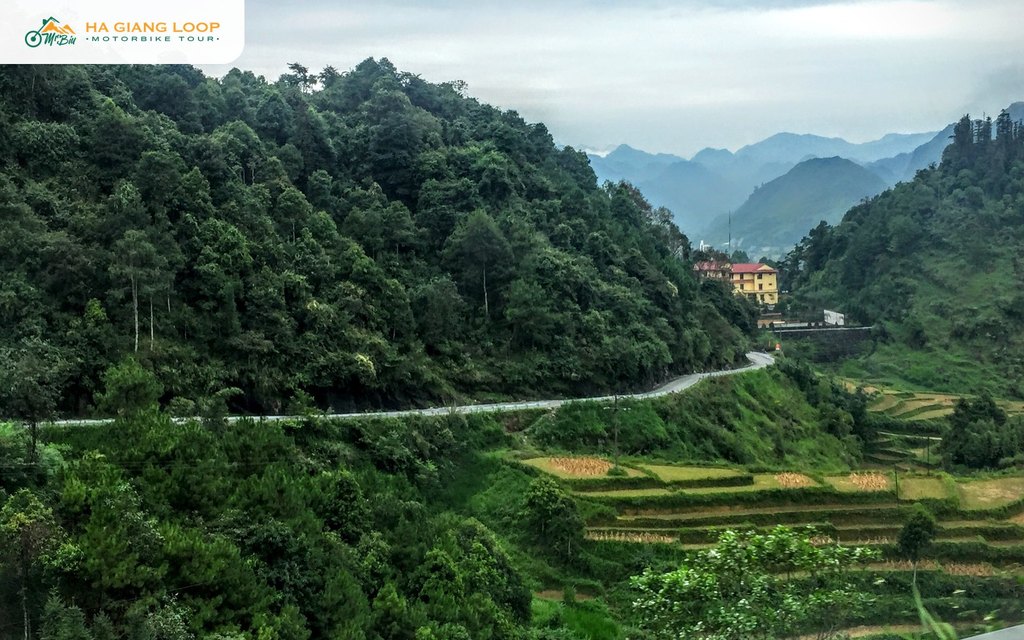
On our 4 days 3 nights tour, the last day runs from Yen Minh through the pine forest and Lung Khuy Cave to lunch in Tam Son, then Heaven Gate and Bac Sum back to the city. Nam Dam is a short climb from the Tam Son lunch stop. Tell your guide in advance if you want the detour, or if you would rather build a custom itinerary with a night in the village. Visitors who like village stays should also look at Thon Tha village near Ha Giang city and the weaving village of Lung Tam in the same district.
Our tours are run by a local family who have ridden these roads their whole lives. Quiet villages like Nam Dam are the kind of stop we build in when guests ask, and our four-day route passes right below it on the way home.
The classic loop: Thai An Pass, Du Gia waterfall, Ma Pi Leng and the Dong Van Karst Plateau, with two homestay nights, plus the Sung La valley and Lung Cam on the final morning. Around 350 km, from $100.
Everything above plus Lung Cu Flagpole, a Lo Lo village, the Yen Minh pine forest and Lung Khuy Cave, at a gentler pace. Around 440 km, from $140.
Self-drive or easy rider on both. Message us on WhatsApp at (+84) 3272 58338 or email mrbiu.booking@gmail.com and tell us your dates.
In Quan Ba district, about four kilometres from Tam Son town, up a short paved road off Highway 4C. It is roughly an hour and a half by motorbike from Ha Giang city via Bac Sum Pass and Quan Ba Heaven Gate.
Yes, if you want a village night rather than a town night. The earthen homestays, the family dinner and the herbal bath are the reasons to stay. It is quiet, so do not expect nightlife.
A hot bath in a wooden tub filled with water boiled with Dao medicinal roots, bark and leaves. Fifteen to twenty minutes is standard. It is meant for tired muscles and is very popular with riders.
Prices are quoted per person and are modest by Western standards. They change with the season and the homestay, so ask when you check in and book early because the water takes time to prepare.
Yes. Many riders stop for an hour, walk the terraces and have a bath, then continue to Yen Minh or back to Ha Giang city. It is a short detour from the Tam Son lunch stop.
Our 4 days 3 nights tour passes through Tam Son on the final day, a few minutes below the village, so the detour is easy to add. Ask when you book and we will build it into the day.