Sunday
10.2026

Lung Cam Village and Pao’s House in the Sung La Valley
09 Sep - 2026
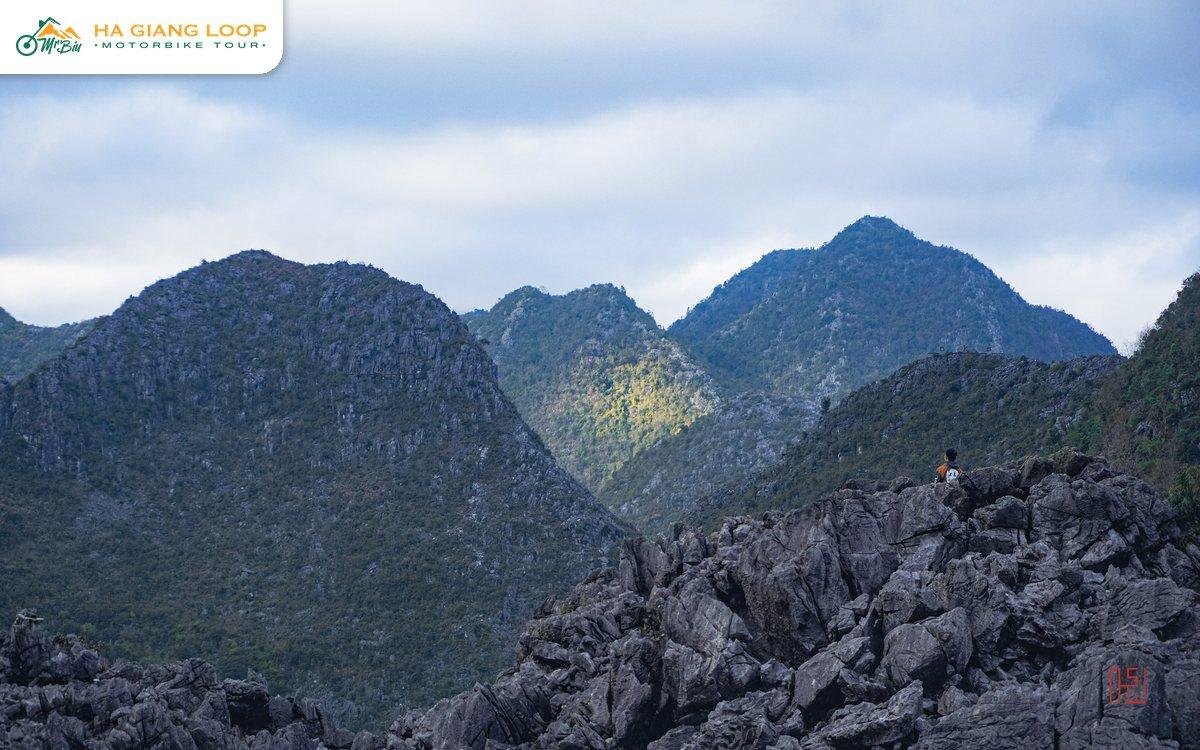
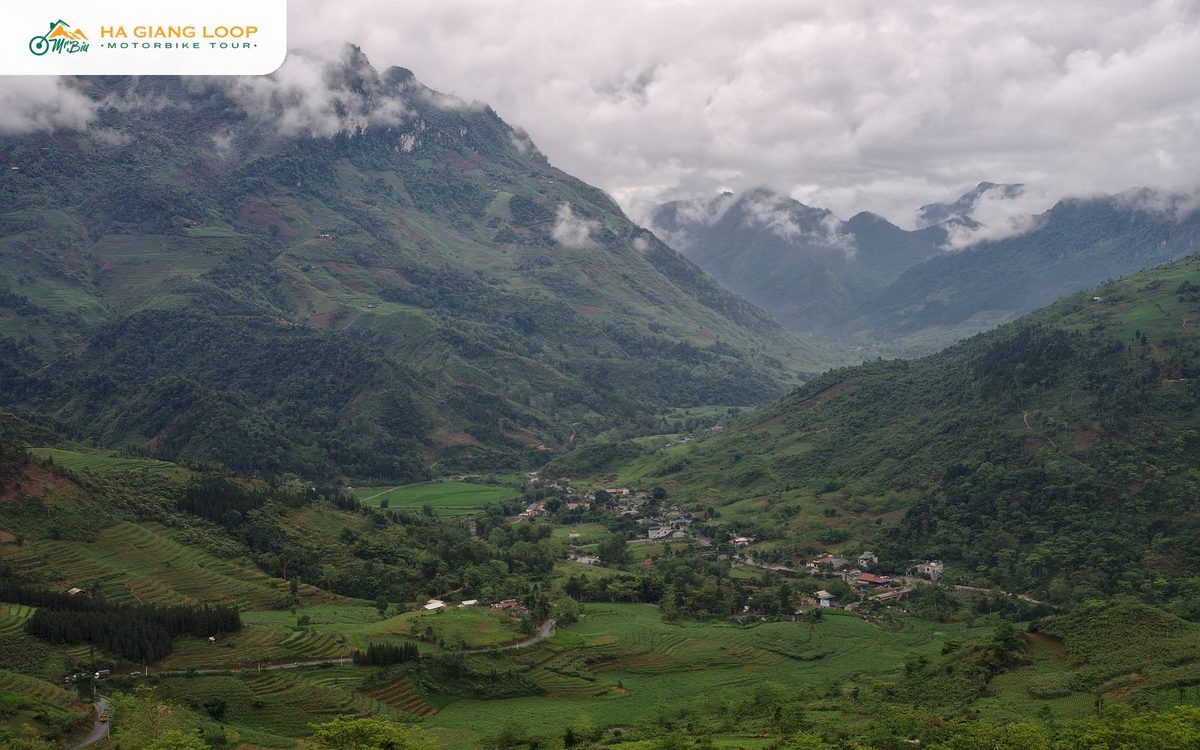
Lung Cam village is the stop on the Ha Giang Loop where everyone puts their phone away last. It sits on the floor of the Sung La valley between walls of grey karst rock, a cluster of earthen houses and stone fences that has barely changed shape in a hundred years.
Riders on our three-day loop already pass through it on the first afternoon. This article is for everyone who wants to know what they are actually looking at, and why this small village became one of the most photographed places in northern Vietnam.
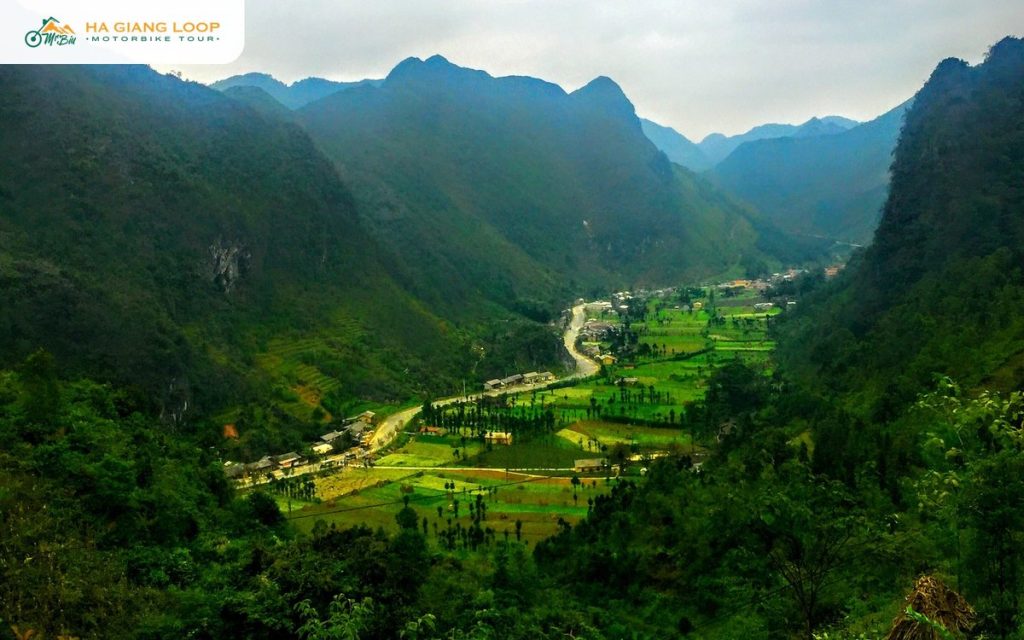
Lung Cam sits in the Sung La valley in Dong Van district, right beside Highway 4C on the stretch between Yen Minh and Dong Van, roughly 25 kilometres from Dong Van town. The valley is one of the most fertile pockets on the Dong Van Karst Plateau, which is why Vietnamese travellers call Sung La the place where rocks bloom into flowers.
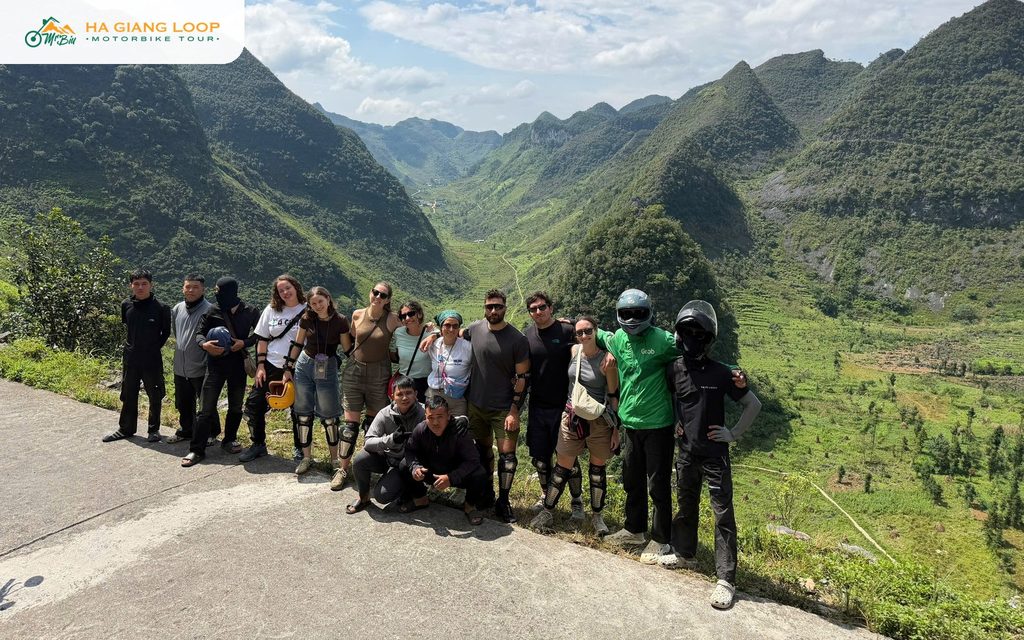
You see the village before you reach it. The road crests a bend above the valley and the whole of Lung Cam appears below: tiled roofs, walled yards, and fields that change colour with the season. It is one of the classic photo stops of the entire loop.
The reason Lung Cam village went from quiet hamlet to household name is a film. In 2006, Chuyen cua Pao, known in English as The Story of Pao, was filmed here in a Hmong house that is now close to a century old. The film won Vietnam’s top cinema awards and the house has been called Pao’s house ever since.
It is a beautiful example of a traditional Hmong home: thick rammed-earth walls that keep the rooms cool in summer and warm in the plateau winter, a timber upper floor, a stone-slab courtyard, and a hand-stacked stone fence around the whole property. A family still lives there, which is exactly what makes visiting it feel different from visiting a museum.
Give the village a slow lap on foot. Beyond Pao’s house, the lanes are the attraction: stone fences stacked without mortar, houses with walls of packed ochre earth, corn drying under the eaves, and children heading to the small school in the middle of the village.
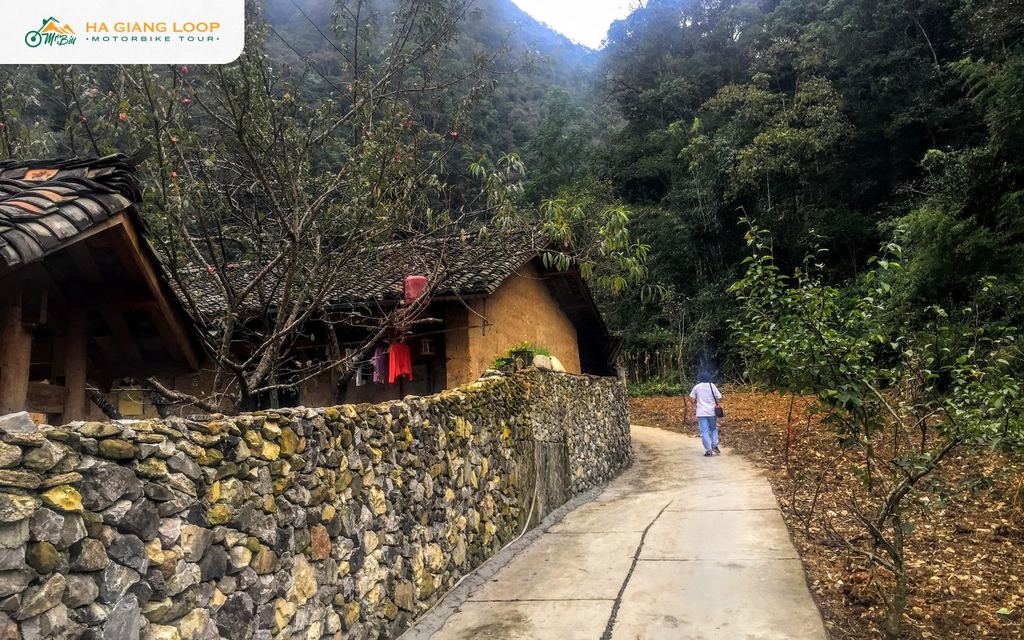
Several dozen households live here, mostly Hmong along with Lo Lo and Han families, and daily life carries on around the visitors. You may see hemp being spun and woven in doorways, the same cloth the plateau has worn for generations. There is a small entrance fee that goes towards keeping the village as it is; treat it as the fairest few thousand dong you will spend all trip.
Lung Cam is worth a stop in any month, but the valley has seasons worth planning around:
The village sits right on the loop route, so this is one famous stop that needs no detour at all. On our three-day tour it comes on the first afternoon: the route climbs Tham Ma pass, carries on through Pho Cao, drops into the Sung La valley for Lung Cam, then crosses Chin Khoanh pass to Dong Van. On the four-day tour you ride the same stretch with more time in hand.
Half an hour is enough for the viewpoint and a quick walk. An hour lets you sit in Pao’s courtyard, watch the weaving and let the village slow you down, which is really the point of coming.
A few small courtesies go a long way here: ask before photographing people, buy something small if a family invites you in, and keep voices down in the lanes. This is a working village first and a filming location second.
Both of our tours are run by a local family who have ridden these roads their whole lives. Same circuit, same homestays, and the only choice is how much time you want to give it.
The classic loop, ridden clockwise: Quan Ba Heaven Gate, the Dong Van Karst Plateau, Ma Pi Leng, the Du Gia waterfall and Thai An Pass, with two homestay nights, plus the Sung La valley and Lung Cam on the first afternoon. Around 330 km, from $114.
Everything above plus Lung Cu Flagpole, a Lo Lo village, the Yen Minh pine forest and Lung Khuy Cave, spread over a gentler pace. Around 440 km, from $154. Best if you would rather stop than hurry.
Self-drive or easy rider on both. Message us on WhatsApp at (+84) 3272 58338 or email mrbiu.booking@gmail.com and tell us your dates.
Yes. It costs you no detour, the valley viewpoint alone justifies the stop, and Pao’s house is the most atmospheric traditional home you can walk into on the loop.
Thirty minutes covers the viewpoint and a quick walk. A full hour lets you visit Pao’s house properly and wander the lanes without rushing.
A small fee is collected for the village, and it goes towards keeping Lung Cam the way it is. Have small notes ready and confirm the amount on the day.
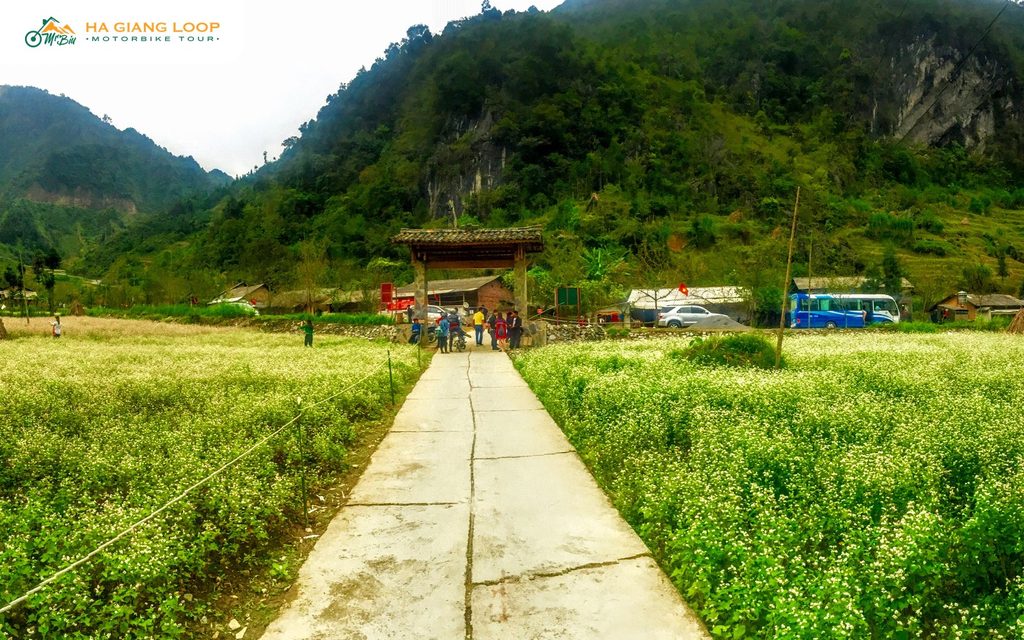
Late October to December for buckwheat, and the weeks after the lunar new year for white mustard and peach blossom. Summer trades flowers for deep green corn and quieter lanes.
Yes, the village sits right beside Highway 4C between Yen Minh and Dong Van. If you self-drive, the usual rules apply, including an international driving permit under the 1968 convention.
No. Lung Tam is the hemp-weaving cooperative village near Quan Ba, a different stop earlier in the loop. Lung Cam is the film village in the Sung La valley near Dong Van.