Friday
09.2026

Ha Giang Loop 3 Days 2 Nights Itinerary: What to Expect
04 Sep - 2026
If you have three days in northern Vietnam and you want to spend them somewhere that still feels unrehearsed, the Ha Giang Loop is the one. Three days and two nights is the shortest version of the loop that doesn’t feel rushed. You ride the full circuit, sleep two nights in mountain villages, and you’re still back in Ha Giang City in time for the night bus to Hanoi.
We’re a family from Phuong Thien, a few kilometres outside Ha Giang City, and we’ve been guiding this route since late 2019. Most of what you read online about the loop was written by someone who rode it once. This is what the Ha Giang Loop 3 days 2 nights itinerary looks like from the saddle, week after week: where you stop, how far you ride each day, where you sleep, and the things that tend to surprise people.
| Day | Route | Distance | Night |
| Day 1 | Ha Giang City to Quan Ba, Tham Ma, Dong Van | ~120 km · 4–5 h riding | Homestay in Dong Van |
| Day 2 | Dong Van to Ma Pi Leng Pass, Meo Vac, Mau Due, Du Gia | ~110 km · 5–6 h riding | Homestay in Du Gia |
| Day 3 | Du Gia to Duong Thuong, Thai An, Ha Giang City | ~100 km · 4–5 h riding | — |
Those are riding hours only. Add two to three hours a day for photo stops, lunch, and the tea somebody’s grandmother will insist you drink.
A word on the roads themselves, because it’s the first thing people ask. The loop is paved and in good condition for almost its entire length, but paved doesn’t mean easy: the passes are narrow, the drops are unfenced, and you’ll share the tarmac with trucks, buffalo and the occasional landslide repair. Riders who take it slowly have no trouble at all. The ones who get into difficulty are almost always in a hurry.
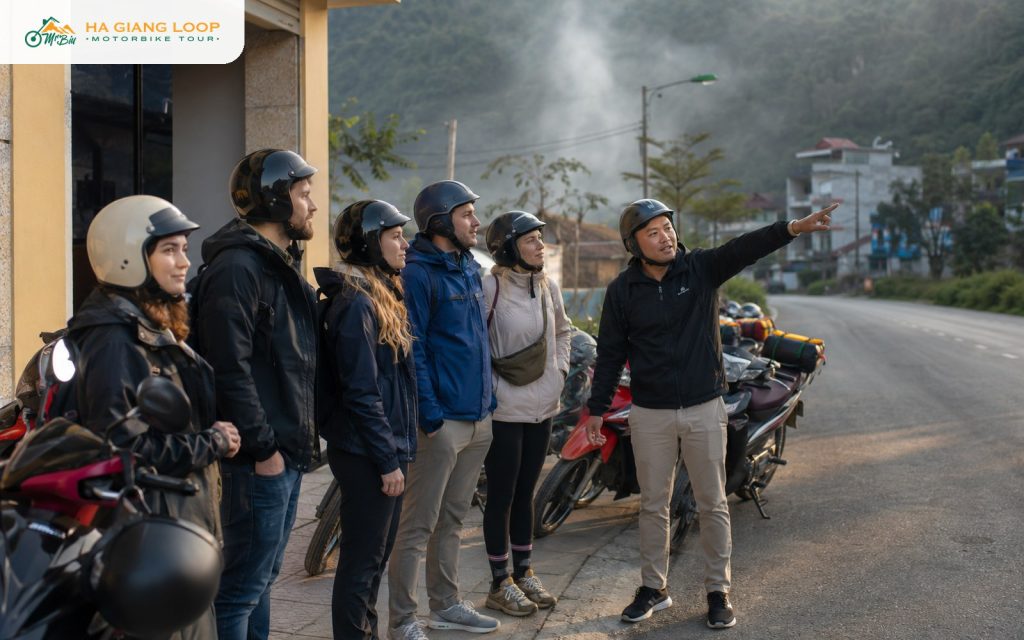
Breakfast is at the hostel from 8am. At 8:30 you meet your guide, get a proper look at your bike and a short practice ride on the flat, and we roll out. We ride the three-day loop clockwise, north on the main road towards Quan Ba, which means the first climb starts almost immediately — Bac Sum Pass, the winding road up out of the river valley.
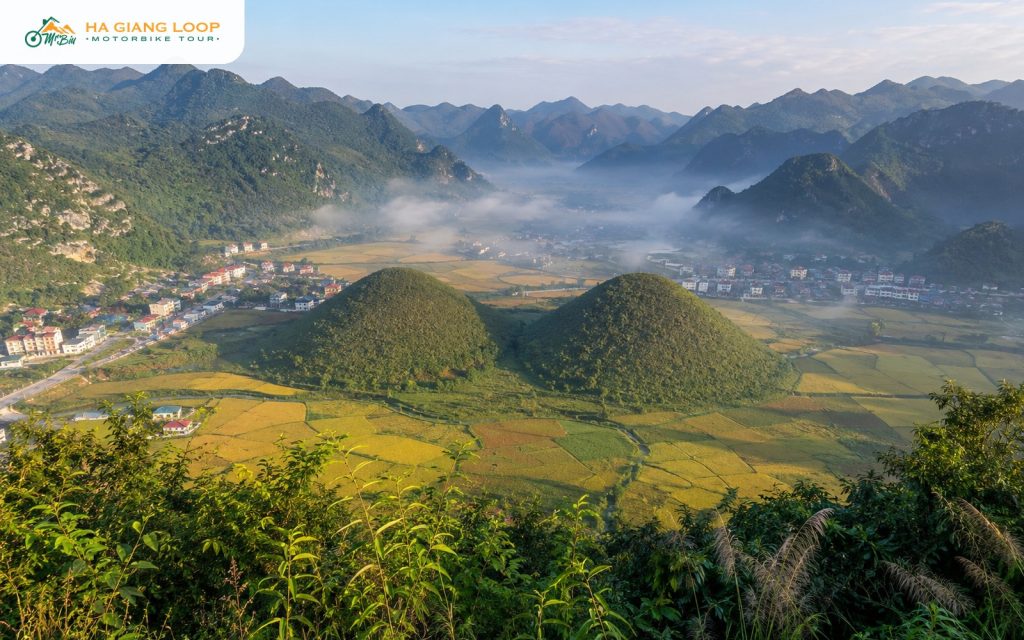
Bac Sum is the warm-up: a long staircase of hairpins that lifts you out of the warm valley and onto the highlands. At the top is Quan Ba Heaven Gate, and below it the Twin Mountains, the two perfectly round hills sitting in the middle of the rice fields as if they were placed there. It is the postcard shot of Ha Giang, and on this route it is the first big reward of the trip.
Lunch is in Tam Son town, just below the viewpoint.
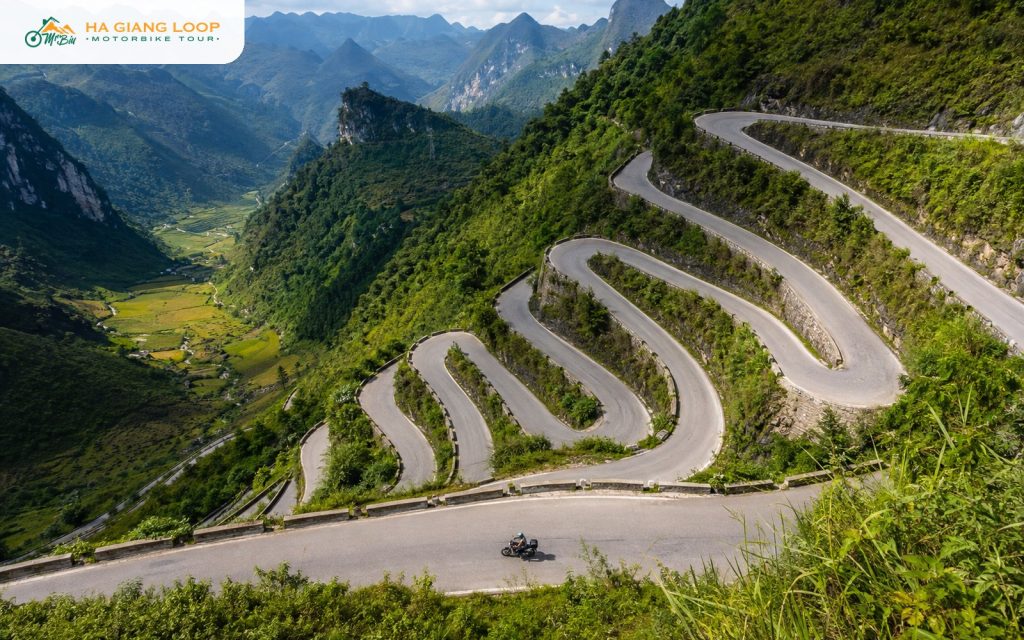
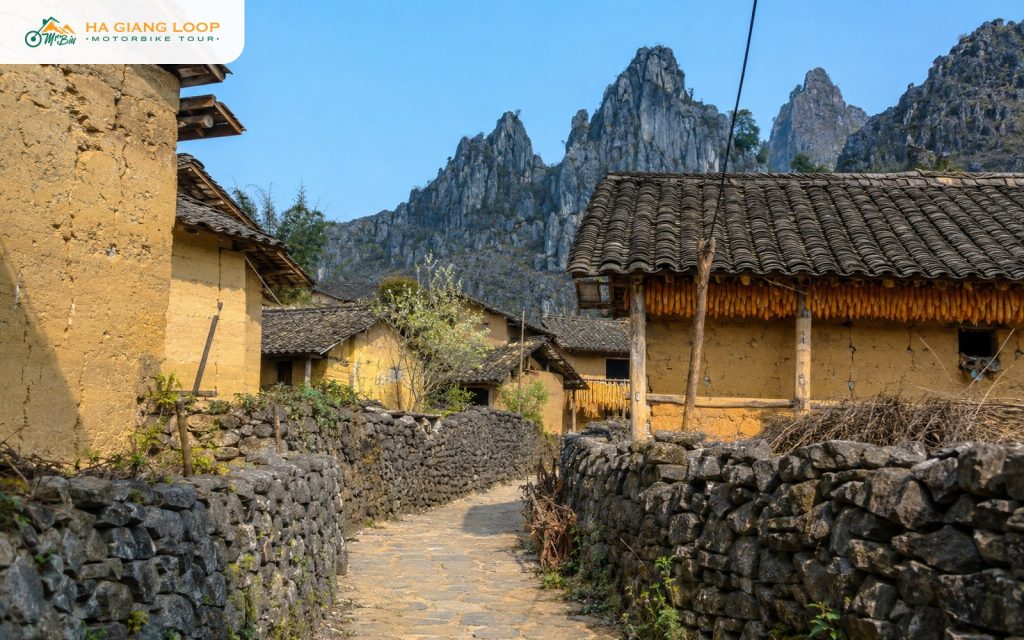
After lunch the road climbs onto the Dong Van Karst Plateau, the first UNESCO Global Geopark recognised in Vietnam, where thousands of limestone outcrops stand on end like a sea that stopped moving. Tham Ma pass comes first, nine hairpins folded into a single hillside and the corner everybody photographs. This is usually where riders find their rhythm properly: slow in, look through the corner, roll out. Past Pho Cao town we drop into Lung Cam, a Hmong village of rammed-earth houses that have stood for a hundred years and more, then ride the curves of Chin Khoanh pass towards Dong Van.
We roll into Dong Van in the late afternoon, with enough daylight left to shower and wander the old quarter before dinner. Dinner is local: grilled pork, mountain greens, sticky rice, and a small glass of corn wine that you are allowed to refuse and nobody manages to.
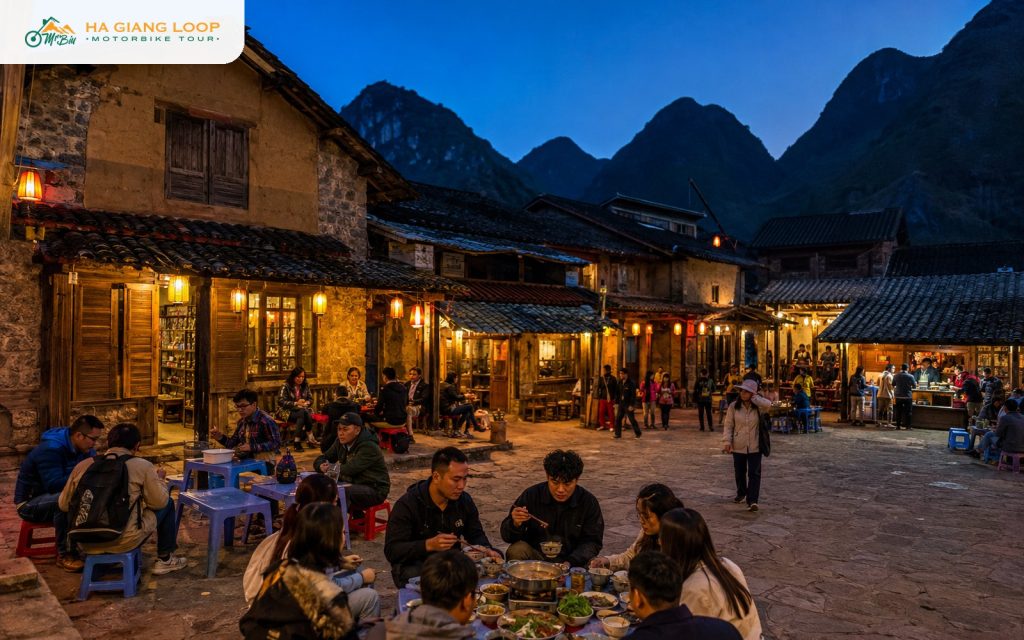
This is the day people book the whole trip for. We say goodbye to the homestay after breakfast and ride east, straight onto the most famous road in the north.
Out of Dong Van the road climbs across the mountains to Ma Pi Leng Pass, the highest and most dramatic section of the loop, and by a wide margin the most famous stretch of road in Vietnam. It sits at around 1,500 metres, carved into a limestone wall by hand in the 1960s by workers who hung off ropes to cut it. The locals call it the Happiness Road, which sounds like a translation until you are standing on it.
From the viewpoint you look straight down at the Nho Que River, a thin ribbon of green water a kilometre below, threading through Tu San Canyon between walls of bare limestone. We stop properly here. There is no version of this trip where we hurry you past it.
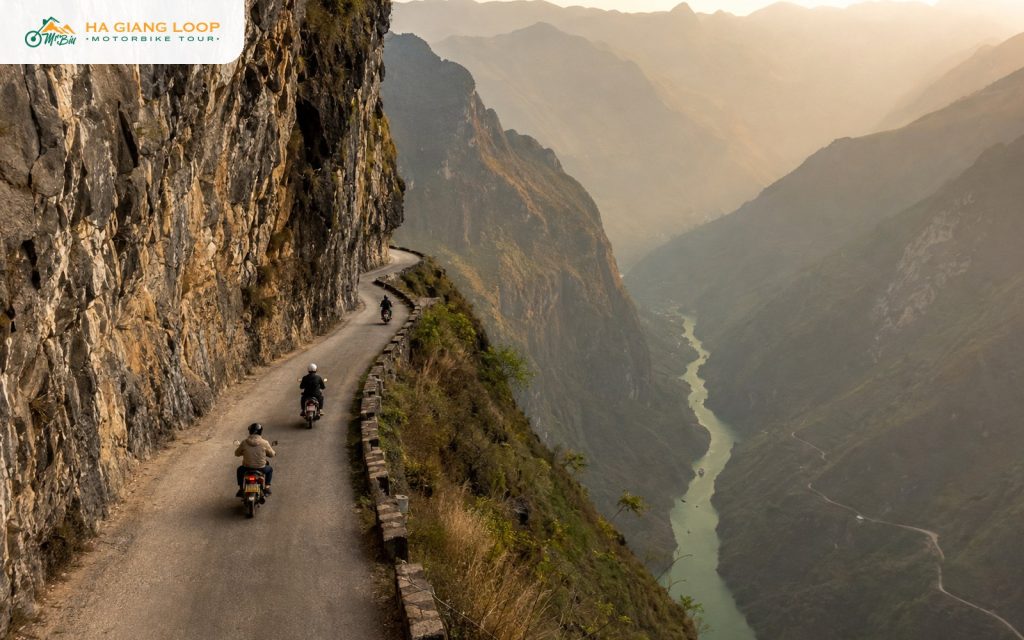
The pass drops down into Meo Vac, and from there the road twists through the M-shaped curves to Mau Due, where lunch is waiting. After lunch we stop at Ngoc Long and go rafting on a stream so blue it looks corrected. Then the valley opens out at Ngam La, where the mountains stretch away in ranges you can count, and the road runs down into Du Gia.

We reach Du Gia in the afternoon with time to spare, and walk down to the waterfall the villagers call the fairy waterfall. The pool is cold and clear and it is the best thing that happens to you after a day in the saddle. Bring something to swim in.
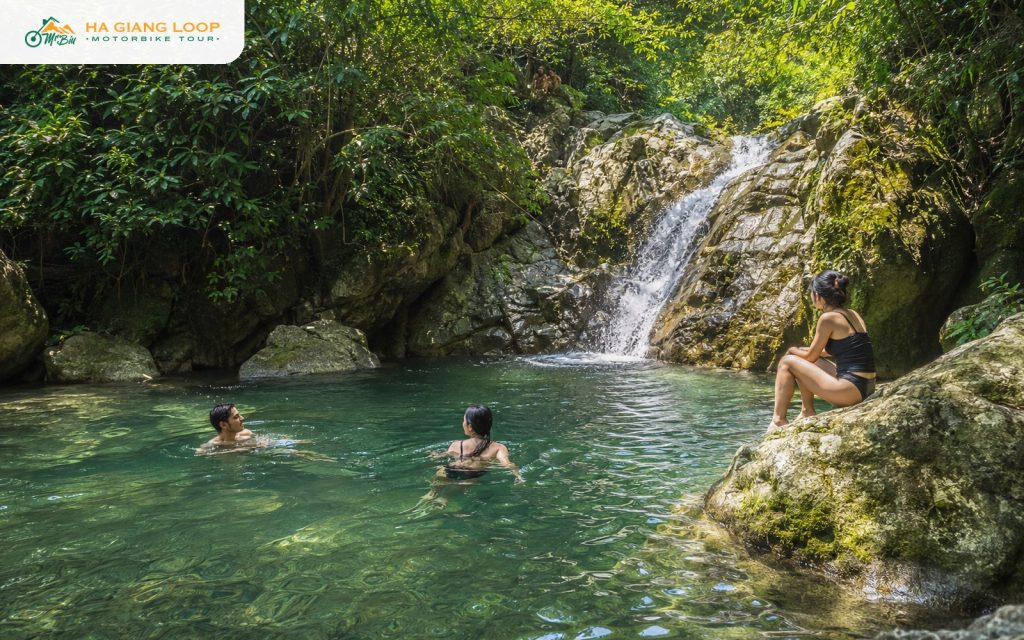
Dinner is Vietnamese home cooking at the homestay, and the evening usually carries on with karaoke and conversation alongside the family and whoever else is staying. There is happy water on the table for anyone who wants it, and nobody minds at all if you would rather not. Night two is peaceful and relaxing after a day in the saddle.
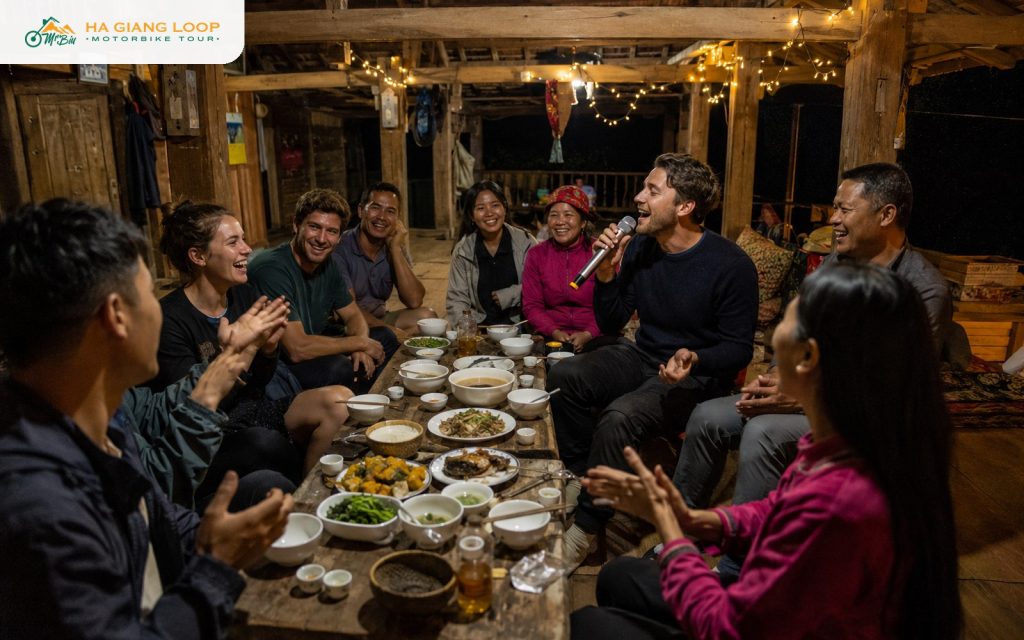
The last day is the quietest one, and the one that ties the loop together. We leave Du Gia after breakfast and ride west on the back road, through valleys that see a fraction of the traffic on the main route north.
First comes Lung Ho valley, then the route runs into Duong Thuong valley, and this is the stretch riders remember without expecting to. Towering mountains on both sides, cornfields growing right up to the edge of the tarmac, and small villages appearing every few kilometres. It is a working valley rather than a viewpoint, which is exactly why it rewards riding slowly.
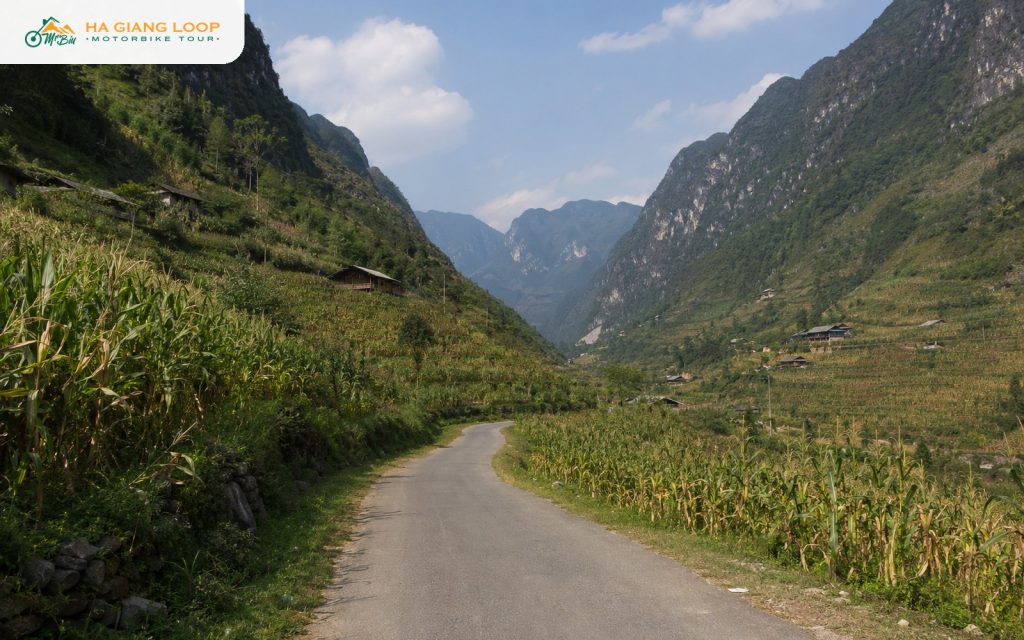
We stop for lunch at a small village beside the stream in Thai An. Simple food, cooked by the family who runs the place, eaten with the water going past a few metres away.
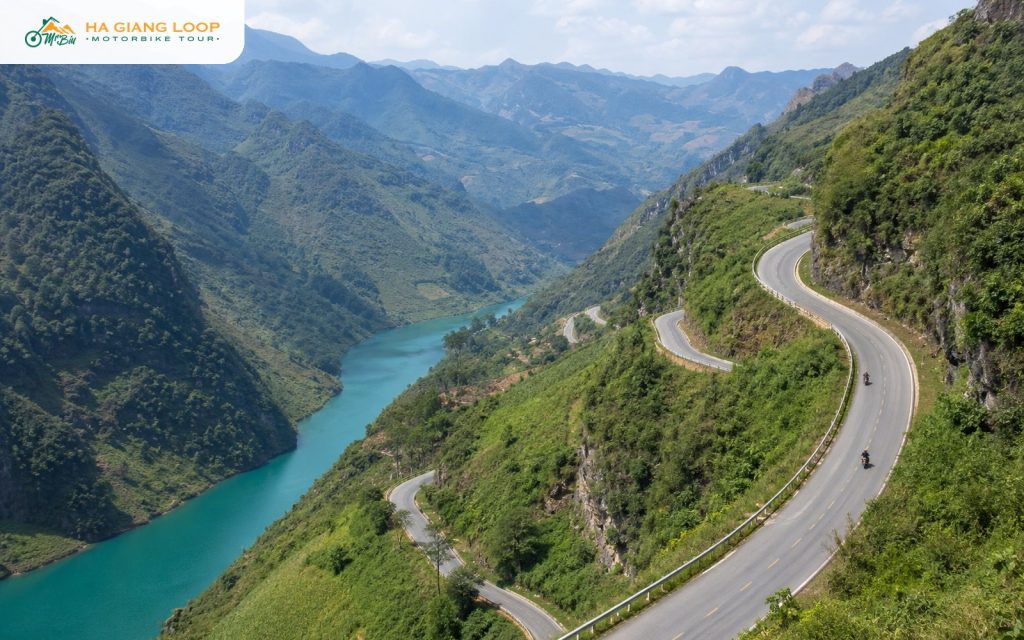
Then comes Thai An pass. The road folds through long curves, and below you the river runs clear blue between the hills. Riding it on the last afternoon means some of the best views of the trip come at the very end, on roads that see far less traffic than the main routes.
We are back at our office in the late afternoon, around 3:30pm. You collect the luggage you left with us, take a proper shower, and there is time to sit down and eat before the evening bus to Hanoi. If you are carrying on to Cao Bang or Sapa instead, tell us the night before and we will help you sort the ticket.
By the time you are back you will have covered around 330 kilometres. It does not sound far written down. Three days of mountain roads is enough, though, for most people to arrive back in Ha Giang City slightly sunburnt, a little sore, and already looking at the map to work out what the four-day version would have added.
The same 3 days 2 nights itinerary runs three ways, and choosing right matters more than choosing cheap.
Bikes are Honda Blade 110cc, Future 125cc, and XR 150cc, matched to your size and experience. Our honest advice, and we give it often: if you’ve never ridden a manual bike, Ma Pi Leng is not where you learn. Take the easy rider option and enjoy the trip instead of surviving it.
Every price above covers the whole three days:
Not included: personal travel insurance, drinks and tips. That’s the full list. There is nothing waiting to be added on at the end.
One thing worth saying plainly, because guests always ask before they book: the free hostel night the evening before your tour isn’t an occasional promotion. It’s included every time, and no other operator on the loop offers it. Arrive on the night bus, sleep properly, eat breakfast with us, and start the ride rested instead of straight off eight hours in a sleeper berth.
You’ll leave your big bag with us, so pack a small daypack:
Our full Ha Giang Loop packing checklist goes through the rest.
Three days covers the complete circuit and every headline view: Du Gia, Ma Pi Leng Pass, the Dong Van plateau, Tham Ma and Quan Ba. Nothing important gets skipped. What you trade is pace, because you’re riding five to six hours on two of the three days.
The 4 days 3 nights version adds the Lung Cu flag tower at Vietnam’s northern border, an extra night on the quiet eastern side of the loop, and roughly two hours less riding per day. If you’re on a tight schedule between Hanoi and your next stop, take the three-day loop. If you have the extra day and you’d rather linger than log kilometres, take four.
Booking is a 10% deposit by bank transfer to hold your spot, with the balance paid on departure day in cash (VND, USD or EUR) or by card with a 3.5% fee. Cancel with at least 12 hours’ notice and there’s no charge. Deposits aren’t refunded but we’ll move them to another date without argument.
We’re a family business, not an agency reselling somebody else’s tour: 4.7 stars across more than 200 reviews, and the same guides year after year. If you have a question before you book, message us on WhatsApp at (+84) 327 258 338. Someone answers at any hour, which matters when you’re planning from a timezone eight hours away.